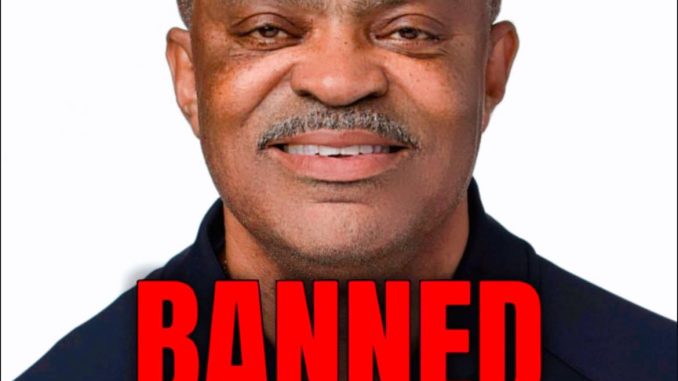
The pressure surrounding the Western Conference Finals between the San Antonio Spurs and the Oklahoma City Thunder had already reached a boiling point before the NBA made its latest stunning decision. But now, with veteran referee Tony Brothers officially suspended and fined by the league amid mounting outrage over the officiating in the series, one of the most intense playoff battles in recent memory has exploded into an even bigger national controversy.
What began as complaints from fans on social media and heated postgame comments from players has quickly transformed into a league-wide debate about officiating standards, consistency, accountability, and whether the NBA has lost control of one of its most high-profile postseason matchups. The league’s disciplinary action against Brothers sent shockwaves across basketball circles late Wednesday night, with insiders describing the move as one of the strongest public statements the NBA has made against a senior official during the playoffs in years.
League sources indicated the punishment stemmed from multiple controversial calls and non-calls during Games 4 and 5 of the Western Conference Finals, a series already defined by physical defense, emotional outbursts, and razor-thin momentum swings. The NBA reportedly completed an internal review shortly after Oklahoma City’s 127-114 Game 5 victory over San Antonio, concluding that several critical officiating decisions failed to meet league standards.
The fallout has been impossible to ignore because the series itself has become the centerpiece of the NBA postseason. Victor Wembanyama has continued his meteoric rise into superstardom for San Antonio, while Shai Gilgeous-Alexander has cemented his place among the league’s elite with a string of dazzling performances for Oklahoma City. Every possession has felt magnified, every whistle scrutinized, and every officiating decision dissected frame by frame across television broadcasts and online platforms.
The tension truly erupted during Game 4 in San Antonio, when several disputed foul calls in the second half triggered frustration from both sidelines. Thunder supporters blasted officials for what they believed was excessive physicality allowed against Gilgeous-Alexander, while Spurs fans accused referees of bailing out Oklahoma City during key stretches of the fourth quarter. By the final buzzer of San Antonio’s 103-82 win, social media had become flooded with clips questioning the officiating crew’s consistency.
Then came Game 5 in Oklahoma City, the contest that appears to have pushed the NBA into action. Brothers, one of the league’s most experienced referees, found himself at the center of multiple explosive moments. A disputed offensive foul against Wembanyama midway through the third quarter halted a Spurs rally and drew furious reactions from the San Antonio bench. Minutes later, a no-call on apparent contact involving Thunder forward Jalen Williams intensified accusations that the officiating had become erratic and unpredictable.
The atmosphere inside Paycom Center shifted from playoff intensity to near-chaos. Players openly argued with officials after dead balls. Coaches repeatedly stepped outside the coaching box in frustration. Television analysts questioned replay decisions in real time. Even former players watching nationally began weighing in publicly, with several suggesting the officiating crew had lost command of the game.
Despite the controversy, Oklahoma City ultimately pulled away behind another brilliant performance from Gilgeous-Alexander, who controlled the tempo late and delivered clutch baskets to give the Thunder a 3-2 series lead. But instead of postgame discussions focusing solely on Oklahoma City’s execution or San Antonio’s adjustments, nearly every conversation centered on the officiating.
Spurs head coach Gregg Popovich was careful not to directly attack referees during his postgame press conference, but his frustration was unmistakable. Popovich paused several times before answering questions about the whistle disparity and repeatedly emphasized the need for “consistency” in playoff basketball. His carefully chosen words only fueled further speculation that the Spurs organization intended to formally raise concerns with the league office.
Thunder coach Mark Daigneault attempted to deflect attention away from officiating entirely, praising his team’s resilience and defensive execution. Still, even Oklahoma City players admitted afterward that the physical nature of the series had created confusion regarding what officials would and would not allow.
By Tuesday morning, reports surfaced that the NBA had reviewed numerous sequences from Games 4 and 5. Hours later, the league confirmed disciplinary measures involving Brothers, though exact details regarding the length of the suspension remain undisclosed publicly. The accompanying fine was described by insiders as “significant,” signaling the seriousness with which the NBA viewed the situation.
The decision immediately divided the basketball world. Some observers applauded the league for finally holding referees publicly accountable during the postseason, arguing that players and coaches are routinely fined or criticized for mistakes while officials rarely face visible consequences. Others warned that singling out one referee risked turning officiating into an even larger spectacle during the Finals race.
For Brothers, the development marks a stunning turn in a career that has spanned decades and included some of the NBA’s biggest stages. Known for his commanding presence and quick technical fouls, Brothers has long been one of the league’s most polarizing officials. Players throughout the years have expressed both respect and frustration regarding his style. Some appreciate his control of chaotic situations, while others believe his personality can sometimes become too involved in the flow of games.
This latest controversy, however, may represent the defining challenge of his officiating career.
Around the league, reactions poured in almost immediately after news of the suspension broke. Former players appearing on national television argued over whether the NBA had gone too far or not far enough. Some insisted officiating errors are inevitable in high-speed playoff basketball and cautioned against creating scapegoats. Others claimed the league needed even greater transparency, including public explanations for referee evaluations and disciplinary decisions.
Fans from both franchises, meanwhile, interpreted the suspension through entirely different lenses. Spurs supporters viewed the league’s action as validation that San Antonio had been negatively affected by officiating inconsistencies throughout the series. Thunder fans countered that poor calls had gone both ways and accused the broader basketball community of unfairly diminishing Oklahoma City’s accomplishments.
Lost beneath the controversy is the reality that this series has delivered extraordinary basketball. Wembanyama has showcased generational talent on both ends of the floor, producing dominant stretches that have evoked comparisons to some of the greatest big men in league history. Gilgeous-Alexander has answered every challenge with calm brilliance, demonstrating why many consider him among the NBA’s most unstoppable offensive forces.
Role players have elevated their games under enormous pressure as well. Chet Holmgren has battled relentlessly in the paint despite facing Wembanyama’s size and length. Devin Vassell has provided critical scoring bursts for San Antonio. Josh Giddey has orchestrated Oklahoma City’s offense during pivotal stretches, while veterans on both rosters have embraced increasingly physical defensive assignments.
Yet every remarkable performance now risks being overshadowed by officiating discourse.
The NBA’s timing is also significant because Game 6 looms as the most important contest of the season for San Antonio. Trailing 3-2, the Spurs face elimination on their home floor, while Oklahoma City enters with an opportunity to punch its ticket to the NBA Finals. League officials undoubtedly hope the suspension of Brothers calms public frustration and restores focus to the players themselves.
Whether that actually happens remains uncertain.
Historically, officiating controversies have often intensified rather than disappeared once the NBA publicly intervenes. Fans become even more sensitive to whistles. Coaches monitor every call more aggressively. Broadcasters dedicate larger portions of coverage to referee analysis. Instead of reducing scrutiny, disciplinary actions can sometimes amplify suspicion regarding league oversight.
That possibility feels especially real in a series already fueled by emotional extremes. The Spurs are attempting to complete one of the league’s fastest rebuilds behind Wembanyama’s emergence as a transcendent superstar. Oklahoma City, after years of patient roster construction, stands on the verge of reaching the Finals with one of the youngest cores in NBA history. The stakes could hardly be higher.
The NBA now finds itself balancing two competing realities. On one hand, the league wants to demonstrate accountability and protect competitive integrity. On the other, it desperately needs the postseason narrative to revolve around basketball excellence rather than officiating controversies. Every additional disputed whistle in Game 6 will likely reignite criticism regardless of who benefits.
Players themselves appear exhausted by the nonstop debate. Several members from both teams reportedly expressed frustration privately that media attention has shifted away from the quality of play. For athletes competing at the highest level under immense pressure, the idea that referees have become the central storyline is deeply disappointing.
Still, that reality underscores how massive this controversy has become.
The NBA has spent years emphasizing transparency through initiatives like the Last Two Minute Report, replay reviews, and expanded referee evaluations. Yet critics argue those systems remain insufficient because they often arrive after games have already been decided. The suspension of Brothers may indicate the league recognizes that frustration among fans, players, and franchises has reached a dangerous level.
What happens next could influence future officiating policies league-wide. If public reaction to the suspension is overwhelmingly positive, the NBA may face growing pressure to reveal more about referee accountability moving forward. Teams have privately pushed for greater communication regarding officiating evaluations for years, particularly during the playoffs.
For now, though, all eyes turn toward Game 6 in San Antonio.
The Spurs will attempt to extend their season in front of a desperate home crowd expected to create one of the loudest environments the Frost Bank Center has experienced in years. Wembanyama carries the weight of a franchise seeking its first Finals appearance since the San Antonio Spurs dynasty era led by Tim Duncan. Across the floor, Gilgeous-Alexander and the Oklahoma City Thunder will try to finish the job and continue one of the NBA’s most impressive rebuild stories.
But no matter who advances, this Western Conference Finals matchup will likely be remembered not only for elite basketball but also for the officiating storm that engulfed it.
And now, with the NBA taking the extraordinary step of suspending and fining one of its most recognizable referees, the spotlight has never burned brighter.
Be the first to comment