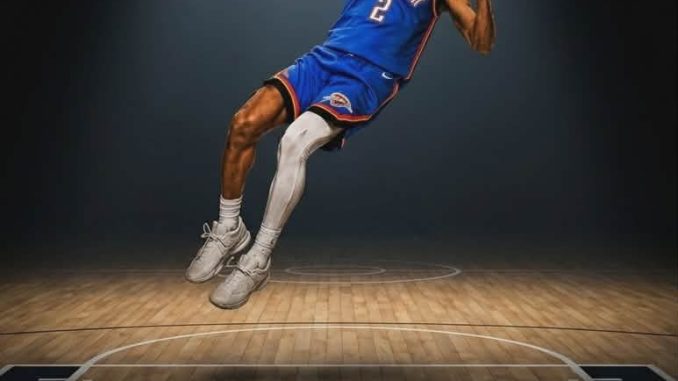
The narrative that followed Shai Gilgeous-Alexander throughout the 2026 NBA Playoffs was impossible to ignore. Every crossover, every hesitation move, every drive into traffic seemed to spark another debate across social media, television studios, and fan circles. Critics labeled him a foul hunter. Opposing fan bases accused him of manipulating officials. The word “flopper” became attached to one of the league’s brightest stars, creating a storyline that often overshadowed the brilliance of his game.
Now, with the season complete and emotions beginning to settle, that narrative appears to have reached its natural conclusion.
The flopping conversation that dominated discussions around Gilgeous-Alexander for months has largely come to an end, replaced by a much simpler reality: he remains one of the NBA’s most unstoppable offensive players and one of the league’s premier superstars. As the offseason begins, attention is no longer centered on how he scores, but rather on how much better he could become when he returns next season.
For much of the year, Gilgeous-Alexander carried the weight of extraordinary expectations. Oklahoma City entered the season viewed as a championship contender, and their franchise centerpiece embraced that challenge from opening night. Night after night, he delivered elite scoring performances while serving as the primary playmaker and leader for a Thunder team that spent the year battling through the highly competitive Western Conference.
Yet as his dominance grew, so did the criticism.
Whenever Gilgeous-Alexander attacked the rim and drew contact, debates followed. Opponents argued that his ability to earn trips to the free-throw line was excessive. Television segments dissected individual possessions. Clips circulated online attempting to portray his movements as exaggerated. Every whistle seemed to become evidence in an ongoing trial conducted by fans and commentators alike.
Lost in many of those conversations was a simple fact: elite scorers throughout NBA history have always found ways to put defenders in impossible situations.
From Michael Jordan to Kobe Bryant, from Dwyane Wade to James Harden, the greatest perimeter scorers have consistently mastered the art of forcing defenders into mistakes. Drawing fouls has never been separate from offensive excellence. It has often been a critical component of it.
Gilgeous-Alexander belongs in that conversation because of the unique way he operates. Unlike many high-volume scorers who rely on overwhelming speed or explosive athleticism, his game is built on patience, timing, balance, and control. Defenders rarely know when he will accelerate, stop, pivot, or change direction. By the time they react, they are frequently out of position.
That unpredictability is precisely what generates contact.
Throughout the postseason, Oklahoma City faced relentless defensive pressure. Opponents threw double teams, traps, physical defenders, and multiple coverage schemes at their superstar. Yet Gilgeous-Alexander continued to produce at an elite level, repeatedly demonstrating why he is considered one of basketball’s most difficult players to guard.
The criticism persisted, but so did the results.
As the Thunder advanced deeper into the playoffs, it became increasingly clear that opposing teams were not losing because of officiating. They were losing because they struggled to contain a player capable of creating advantages on virtually every possession.
Even when whistles were absent, Gilgeous-Alexander remained effective.
His mid-range game continued to flourish. His ability to finish around larger defenders remained elite. His footwork repeatedly created clean looks in crowded spaces. His playmaking generated opportunities for teammates. Every aspect of his offensive arsenal reinforced the same message: his success was rooted in skill rather than controversy.
The Western Conference Finals served as another reminder of that reality.
Facing immense pressure and the expectations that accompany superstar status, Gilgeous-Alexander continued to compete at the highest level. While Oklahoma City ultimately fell short of reaching the NBA Finals, the series provided a revealing glimpse into the evolution of both the player and the franchise.
The Thunder entered the postseason as one of the league’s youngest contenders, and their journey highlighted both their strengths and areas for growth. Gilgeous-Alexander shouldered much of the responsibility, often facing defenses specifically designed to slow him down.
Even in defeat, he displayed the qualities that define franchise superstars.
He accepted accountability.
He continued attacking.
He never stopped competing.
Those traits have become central to his identity since arriving in Oklahoma City and emerging as one of the NBA’s premier talents.
What makes Gilgeous-Alexander particularly dangerous moving forward is that he has shown a consistent commitment to improvement. Every season of his career has featured noticeable growth. He has expanded his scoring repertoire, sharpened his playmaking instincts, strengthened his leadership skills, and elevated his defensive impact.
There is little reason to believe that trend will stop now.
If anything, the disappointment of falling short could fuel another leap.
Great players often use criticism as motivation. The NBA’s biggest stars frequently transform postseason setbacks into offseason development plans. Whether it was Jordan after playoff defeats early in his career, Bryant after championship losses, or numerous modern stars seeking redemption following disappointment, history has shown that elite competitors rarely remain stagnant.
Gilgeous-Alexander appears cut from that same cloth.
The narrative surrounding him may have focused on officiating and foul calls, but internally, his focus has likely remained on improvement. Players of his caliber do not spend summers arguing with critics. They spend summers refining weaknesses and expanding strengths.
That mindset should concern the rest of the league.
The version of Gilgeous-Alexander that just completed the season was already among basketball’s most complete offensive players. He possesses a lethal mid-range game, exceptional body control, advanced footwork, elite finishing ability, and the patience necessary to manipulate defensive schemes.
Imagine those tools becoming even sharper.
Imagine a more efficient three-point shot.
Imagine further growth as a passer.
Imagine additional strength to withstand playoff physicality.
Imagine an even deeper understanding of defensive coverages.
Those possibilities explain why many around the league believe his best basketball still lies ahead.
For Oklahoma City, that prospect represents enormous optimism.
The Thunder have spent years building one of the NBA’s most promising young cores. Their front office accumulated draft assets, developed talent, and maintained long-term flexibility while constructing a roster capable of sustained success. At the center of that vision stands Gilgeous-Alexander, whose emergence transformed the franchise from a rebuilding team into a legitimate contender.
His leadership has become just as important as his production.
Teammates consistently praise his professionalism and work ethic. Coaches trust his decision-making. The organization views him as the foundation upon which championship aspirations are built.
Those qualities matter because championship windows are rarely defined by talent alone. They are often determined by culture, resilience, and leadership.
Gilgeous-Alexander has demonstrated all three.
The scrutiny he faced this season would have frustrated many players. Constant criticism, endless debates, and viral social-media discussions can become distractions. Yet he largely avoided public confrontations and allowed his performance to speak for itself.
That approach ultimately helped shift the conversation.
As the playoffs progressed, more observers began acknowledging the broader picture. Rather than focusing exclusively on whistles, analysts increasingly highlighted his footwork, efficiency, creativity, and basketball IQ. The discourse gradually moved away from accusations and toward appreciation.
In many ways, that transition reflects what happens when greatness becomes impossible to ignore.
Every superstar experiences periods of skepticism.
Jordan faced doubters.
Bryant faced doubters.
LeBron James faced doubters.
Virtually every all-time great encountered narratives designed to diminish their accomplishments.
Eventually, sustained excellence tends to overpower those narratives.
Gilgeous-Alexander may not have reached that final stage yet, but the trajectory is unmistakable. His body of work has become too substantial to dismiss. His impact on winning is too significant. His skill level is too advanced.
That does not mean criticism will disappear entirely.
The NBA thrives on debate, and discussions surrounding officiating are unlikely to vanish anytime soon. Every season introduces new controversies, new narratives, and new talking points. Fans will continue arguing about foul calls. Opposing supporters will continue expressing frustration. Social media will continue amplifying every controversial whistle.
But the central storyline surrounding Gilgeous-Alexander appears to be changing.
Instead of asking whether he benefits from officiating, people are increasingly asking how defenses can stop him.
That is a very different conversation.
As the offseason begins, attention turns toward what comes next. Oklahoma City will regroup, evaluate its playoff run, and prepare for another championship pursuit. The roster remains talented. The core remains young. The future remains bright.
Most importantly, their superstar remains hungry.
History suggests that players who experience postseason disappointment often return with renewed determination. The sting of falling short can become a powerful motivator. Every missed opportunity becomes fuel for future success.
For Gilgeous-Alexander, that process begins now.
The criticism that once dominated headlines has faded into the background. The debates that consumed basketball conversations throughout the year have lost much of their momentum. What remains is the image of a superstar entering his prime, equipped with elite talent and driven by unfinished business.
The flopping narrative has come to an end.
At least for now.
And if the rest of the NBA was hoping that would signal a step backward for Oklahoma City’s franchise cornerstone, they may be in for a rude awakening. Because if history has taught us anything about competitors of Gilgeous-Alexander’s caliber, it is that criticism rarely breaks them.
More often, it sharpens them.
That should make the league take notice.
Because next season, Shai Gilgeous-Alexander is expected to return stronger, smarter, and more determined than ever. The debates may fade, but the statement he is preparing to make could be louder than any narrative that came before it. 🔥
Be the first to comment