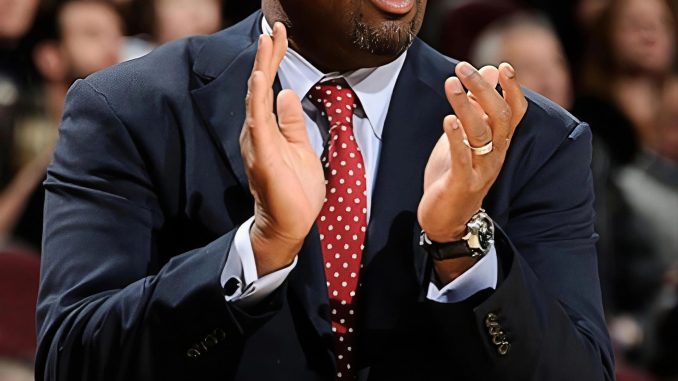
The New York Knicks’ long-awaited return to the NBA Finals has already become one of the defining storylines of the modern era, but now a new layer has been added to the celebration—financial reward for the man at the center of the turnaround. According to reports, head coach Mike Brown is set to receive a $2 million cash bonus for guiding the New York Knicks back to the NBA Finals for the first time in 27 years, marking a stunning culmination to a season that reshaped the franchise’s identity and reawakened a fan base long accustomed to waiting.
The bonus, while significant, is being viewed around league circles less as a surprise and more as a reflection of the magnitude of the accomplishment. For a franchise that last appeared on the NBA’s biggest stage in 1999, the Knicks’ breakthrough represents not just a basketball achievement but a cultural reset in New York sports. The financial incentive tied to the run underscores how rare and valuable this moment is for an organization that has spent decades searching for sustained postseason relevance.
When Brown was hired, expectations were high but measured. He was brought in to restore structure, accountability, and defensive identity to a team that had shown flashes of talent but lacked consistency in playoff execution. While his coaching résumé already included deep postseason experience and a reputation for building disciplined systems, few projected a Finals return in his first full push with the roster. Yet what unfolded over the course of the season has redefined both his legacy and the trajectory of the Knicks’ core.
The Knicks’ playoff run has been characterized by defensive dominance, late-game composure, and a level of physical toughness that has historically defined successful New York teams. Under Brown’s leadership, the team embraced a more methodical offensive approach while leaning heavily on defensive versatility across multiple matchups. That balance proved critical as they navigated a demanding Eastern Conference bracket, where every series tested their depth and resolve.
Internally, Brown’s impact has been described as transformative. Players have credited him with establishing a clear hierarchy, simplifying decision-making in high-pressure moments, and reinforcing accountability on both ends of the floor. The Knicks’ identity shift did not happen overnight, but rather through a consistent emphasis on preparation and detail—traits Brown has long been known for throughout his coaching career.
The reported $2 million bonus is tied specifically to the Knicks’ advancement to the NBA Finals, a benchmark that had eluded the franchise for nearly three decades. In an era where coaching contracts increasingly include performance-based incentives, this payout reflects both the organizational stakes and the emotional weight of ending one of the league’s longest Finals droughts. It also highlights how rare this achievement has been for one of the NBA’s most storied franchises.
For Knicks fans, the return to the Finals represents more than just wins and losses. It signals the revival of Madison Square Garden as a true championship stage, a place where the energy of a basketball city once again meets legitimate title contention. The drought since 1999 has been marked by rebuilds, near misses, and fleeting moments of hope, but this season has carried a different tone from the start—one rooted in stability rather than unpredictability.
Brown’s coaching journey has long been defined by adaptability. Across multiple stops in the league, he has developed a reputation for elevating defensive standards and maximizing roster strengths without overcomplicating systems. In New York, that approach has found its most complete expression. The Knicks have not relied on a single superstar carrying the load each night; instead, they have leaned on collective execution, defensive communication, and situational discipline.
As the postseason progressed, the Knicks repeatedly demonstrated an ability to adjust on the fly. Whether facing high-powered offensive teams or grinding out low-possession battles, Brown’s rotations and in-game decisions consistently reflected a willingness to trust his system and his players. That trust has been reciprocated, with the roster responding to adversity with resilience rather than fragmentation.
The financial reward now attached to this run only amplifies the significance of what has been achieved. In professional sports, bonuses of this magnitude are typically reserved for landmark accomplishments, and reaching the NBA Finals—particularly for a franchise carrying the weight of a 27-year absence—is exactly that. It also reflects the high expectations placed on Brown when he accepted the job, where success was never defined solely by regular-season wins but by postseason breakthroughs.
Beyond the numbers, the Knicks’ resurgence has also reignited conversations about the franchise’s place in the modern NBA hierarchy. For years, New York has hovered between rebuilding and retooling, often lacking the continuity required to compete with elite organizations in the playoffs. This season, however, has positioned them squarely among the league’s final contenders, restoring a sense of legitimacy that had been intermittently questioned.
Much of that shift has been attributed to the synergy between coaching philosophy and roster construction. The front office’s emphasis on defensive versatility and depth has aligned closely with Brown’s system, creating a more cohesive identity than in previous iterations. Rather than relying on isolation-heavy offense or inconsistent transition play, the Knicks have developed a structure that prioritizes ball movement, defensive switches, and controlled tempo.
As the Finals approach, attention now turns to whether this Knicks team can complete the final step. The challenge ahead will be significantly greater, as the league’s last remaining opponent presents a level of competition that will test every adjustment Brown has implemented throughout the season. Still, the foundation that carried New York to this point suggests a team built not just for a single series, but for sustained playoff battles.
Inside the locker room, the focus has reportedly remained steady despite the external noise surrounding the bonus news. Players have emphasized that while the achievement is historic, the ultimate goal remains unfinished business. That mentality aligns closely with Brown’s coaching philosophy, which has consistently stressed process over outcome, even in moments of celebration.
For Brown personally, the bonus adds another layer to an already defining chapter in his coaching career. While he has experienced playoff success in previous roles, guiding the Knicks to their first Finals appearance in nearly three decades carries a different weight entirely. It is an accomplishment that will be measured not only in financial terms but in historical significance for a franchise that has long occupied a central place in the NBA’s narrative.
The broader league reaction has also reflected the magnitude of the moment. Coaches, executives, and former players alike have acknowledged the difficulty of rebuilding a franchise under the scrutiny that comes with coaching in New York. The pressure at Madison Square Garden is unique, and sustaining success under that spotlight requires both tactical precision and emotional control—qualities Brown has displayed throughout the season.
As the Knicks prepare for the Finals stage, the combination of competitive achievement and organizational reward tells a larger story about where the franchise stands today. A $2 million bonus may capture headlines, but the deeper significance lies in what it represents: a long-awaited return to relevance at the highest level of basketball.
The journey from rebuilding uncertainty to Finals contention has not been linear, and it has not been without skepticism. Yet under Brown’s leadership, the Knicks have managed to transform expectations into results, reshaping both internal culture and external perception. Now, with history already made and the ultimate prize still within reach, the franchise finds itself in a position it has not occupied in 27 years—playing for everything.
Be the first to comment