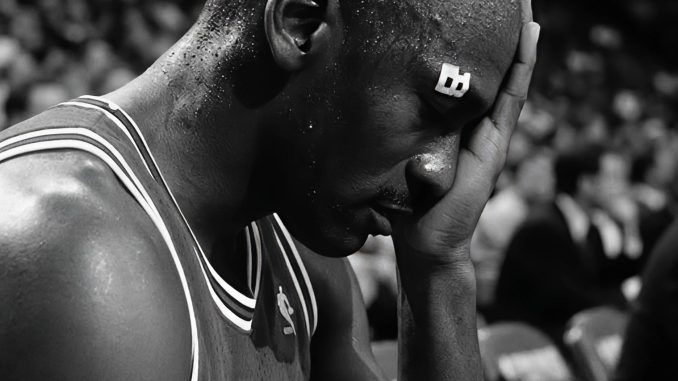
For decades, the name Michael Jordan has represented basketball greatness at its highest level. Six NBA championships, five MVP awards, global fame, and a competitive aura that transformed the sport into a worldwide entertainment machine already cemented his legacy as the greatest basketball player many have ever seen. But long after his final NBA game, Jordan continues to dominate a different arena entirely — business. In a stunning reminder that his influence extends far beyond the hardwood, Jordan has officially become the richest athlete in history, building a staggering estimated fortune of $4.3 billion powered largely by the empire he created alongside Nike and the globally iconic Jordan Brand.
The rise from basketball superstar to billionaire mogul is one of the most remarkable financial success stories in sports history. Athletes have always earned enormous sums through contracts and endorsements, but Jordan elevated the blueprint into something completely different. What began as a rookie sneaker partnership in the mid-1980s has evolved into a multibillion-dollar global business machine that continues to generate massive annual revenue nearly four decades later. While modern stars sign shoe deals worth hundreds of millions, Jordan’s partnership with Nike remains untouchable because it became more than an endorsement — it became a cultural institution.
Jordan entered the NBA in 1984 as a young star from the University of North Carolina with immense potential after hitting the game-winning shot in the NCAA championship game. The Chicago Bulls selected him third overall in the draft, and even before he played his first professional game, shoe companies recognized his marketability. At the time, Nike was not the giant basketball powerhouse it would later become. The company was still searching for a transformational figure who could elevate its basketball division into mainstream dominance.
Jordan initially preferred Adidas, according to numerous stories told over the years, but Nike aggressively pursued the young rookie with a groundbreaking offer that included signature branding, unprecedented marketing commitment, and royalties that would later change athlete endorsements forever. In 1984, the two sides agreed to what would become one of the most profitable partnerships in sports business history.
Few could have imagined what was coming next.
The original Air Jordan sneakers exploded into a cultural phenomenon almost immediately. The NBA’s decision to fine Jordan for wearing black-and-red shoes that allegedly violated league uniform policy only fueled the hype. Nike cleverly turned controversy into marketing gold, framing Jordan as a rebellious superstar challenging the status quo. The “banned” narrative became legendary, and suddenly Air Jordans were not just basketball shoes — they were symbols of style, individuality, and status.
Jordan’s dominance on the court amplified the movement even further. Every soaring dunk, every clutch shot, and every championship moment became connected to the brand. As Jordan evolved into the face of the NBA during the late 1980s and 1990s, the shoes became synonymous with greatness itself. Kids across America and eventually across the globe wanted to “Be Like Mike,” and owning Jordans became part of that dream.
The relationship between Jordan and Nike changed the economics of sports endorsements forever. Unlike standard athlete sponsorships that paid fixed salaries, Jordan’s royalty structure allowed him to earn a percentage of sales. As the brand exploded globally, so did his wealth. Decades later, that decision continues to pay historic dividends.
Jordan Brand now generates billions in annual revenue for Nike. The Jumpman logo has become one of the most recognizable symbols in sports and fashion worldwide. What makes the accomplishment even more remarkable is that Jordan retired from basketball years ago, yet his influence remains stronger than many active athletes currently dominating headlines. New Air Jordan releases still create frenzy among sneaker collectors, streetwear enthusiasts, and basketball fans alike.
Financial experts have long pointed to Jordan as the gold standard of athlete branding, but reaching an estimated net worth of $4.3 billion elevates him into an entirely different category. His fortune is built not only on shoe royalties but also on ownership investments, business ventures, endorsements, and the massive increase in value tied to his stake in the Charlotte Hornets over the years.
Jordan purchased a minority stake in the Hornets in 2006 before becoming the majority owner in 2010. At the time, the franchise valuation was far lower than today’s NBA standards. Over the next decade, NBA team values skyrocketed as television rights, global popularity, and league revenue exploded. Jordan eventually sold a majority share of the franchise in a deal that reportedly valued the Hornets at around $3 billion, creating another enormous financial boost to his empire.
That move reinforced Jordan’s reputation as not only a sports icon but also a savvy businessman capable of making elite-level investment decisions. While some former athletes struggle transitioning into retirement, Jordan transformed his playing legacy into generational wealth on a scale few public figures in sports history have ever achieved.
What separates Jordan from other wealthy athletes is the staying power of his brand. Many stars enjoy temporary endorsement peaks during their playing careers, but Jordan’s image has remained commercially dominant for decades. Young fans born years after his retirement still line up for Air Jordan releases, wear retro jerseys, and study highlights of his legendary performances with the Bulls. In many ways, Jordan transcended sports and became a permanent part of global culture.
Documentaries and media appearances have only strengthened that legacy. The release of The Last Dance reignited worldwide fascination with Jordan’s career and competitive mentality. The series became a cultural phenomenon during the pandemic era, introducing younger generations to the intensity, charisma, and dominance that defined his reign atop the NBA. Merchandise sales surged once again, proving that Jordan’s appeal remains timeless.
Jordan’s billionaire journey also reflects the changing financial landscape of professional sports. Athletes today enter leagues with far greater business awareness than previous generations. Many current superstars openly discuss ownership stakes, venture capital investments, media companies, and brand-building strategies. Much of that mindset can be traced back to the blueprint Jordan helped create.
Before Jordan, endorsements were valuable side income. After Jordan, endorsements became pathways to empire-building.
Modern icons such as LeBron James, Tiger Woods, and Cristiano Ronaldo have all leveraged global fame into massive business success, but Jordan’s combination of longevity, cultural relevance, and commercial dominance still stands alone. Even among billionaire athletes, his financial achievements remain unprecedented.
The Jordan Brand itself has evolved into far more than basketball footwear. It now spans apparel, collaborations, lifestyle fashion, and partnerships across multiple sports. Elite athletes in basketball, football, baseball, and motorsports proudly wear the Jumpman logo. College programs sponsored by Jordan Brand carry unique prestige, while collaborations with musicians, designers, and celebrities continue expanding its reach into pop culture and luxury fashion spaces.
That expansion helped Jordan maintain relevance across generations. Teenagers who never watched him play still view the Jumpman logo as cool and aspirational. Few athletes in history have managed to preserve that level of influence decades after retirement. Jordan accomplished it by turning excellence into identity. The brand represents winning, confidence, style, and greatness all at once.
Jordan’s relentless competitive drive also played a major role in his business success. Former teammates, coaches, and rivals have long described his obsession with excellence. That same mentality appears to have carried into his post-playing ventures. Whether in ownership meetings, endorsement negotiations, or brand expansion strategies, Jordan reportedly approached business with the same intensity that once terrified defenders on NBA courts.
His story is especially remarkable considering how different athlete branding looked during the early stages of his career. Social media did not exist. Global marketing infrastructure was nowhere near today’s standards. Yet Jordan still became one of the most famous people on Earth through television, commercials, highlights, and pure star power. In the modern digital era, his brand has only become more accessible and immortalized.
The financial numbers behind Jordan’s empire are staggering. Reports over the years have suggested he earns hundreds of millions annually from Nike royalties alone. In some years, Jordan reportedly made far more from Nike after retirement than he ever earned during his actual NBA salary years combined. It remains one of the clearest examples of how branding can ultimately surpass athletic earnings themselves.
Ironically, Jordan was considered underpaid by today’s NBA superstar standards for much of his playing career. While he did earn massive salaries later with the Bulls, especially during the late 1990s, modern NBA contracts dwarf what players earned during his era. Yet no athlete from any generation has turned fame into wealth more effectively.
Jordan’s influence also reshaped sneaker culture worldwide. Sneaker launches became events. Limited releases created entire resale economies. Collectors built billion-dollar industries around exclusive footwear drops. The modern sneaker ecosystem, from resale marketplaces to hype culture, owes enormous credit to the original Air Jordan phenomenon that began in the 1980s.
At the same time, Jordan’s rise to billionaire status continues to spark debate about his place in sports history overall. For many fans, the GOAT argument already ended long ago because of his perfect 6-0 Finals record, legendary scoring ability, defensive excellence, and unmatched competitive aura. Now his business accomplishments have added another layer to his mythos. Jordan did not simply dominate basketball — he built an empire powerful enough to outlast generations.
Even critics who prefer other basketball legends often acknowledge that Jordan’s off-court success remains unmatched. His ability to maintain luxury-level relevance decades after retirement is extraordinary. Few celebrities sustain global demand for products tied to their personal image for forty years. Jordan continues doing exactly that.
The symbolism of Jordan becoming the richest athlete ever also reflects how sports evolved into global entertainment economics. Athletes are no longer just players; they are brands, corporations, and investment entities. Jordan was one of the first to truly realize the possibilities of that reality at the highest level.
Beyond the financial milestones, Jordan’s story carries a deeper cultural meaning. He represented excellence during a transformative era in basketball history. His rise coincided with the NBA’s explosion into a worldwide phenomenon under former commissioner David Stern. Jordan became the face of that expansion, captivating audiences from Chicago to China. The global basketball community that exists today was heavily shaped by his popularity.
As new generations continue entering the sports world, Jordan’s blueprint remains the standard everyone studies. Young athletes increasingly prioritize ownership, branding, intellectual property, and long-term business strategies because they witnessed what Jordan achieved. He proved that greatness on the court could become something even larger off of it.
For all the numbers attached to his empire, Jordan’s mystique still begins with basketball. Fans still remember the iconic moments — the game-winners, the championships, the flu game, the dunks, the fierce stare before destroying opponents in crunch time. Those moments built the foundation for everything that followed. Without the excellence, the brand would never have become immortal.
Now, as the richest athlete in history with a $4.3 billion empire, Jordan’s legacy stretches far beyond championships and trophies. He conquered the NBA, revolutionized sports marketing, transformed sneaker culture, and created one of the most powerful personal brands the world has ever seen. From GOAT to billionaire king, Michael Jordan continues to redefine what is possible for athletes everywhere.
Be the first to comment