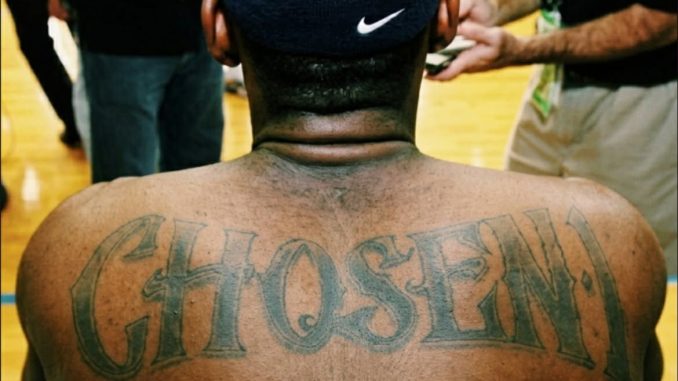
When LeBron James first appeared on the cover of Sports Illustrated as a high school junior with the words “The Chosen One” splashed across the page, the basketball world immediately understood the magnitude of the moment. It was not simply hype. It was a declaration that a teenager from Akron, Ohio, was expected to carry the future of the NBA on his shoulders before he had even graduated from high school. For most athletes, that kind of pressure would have been impossible to survive. For LeBron James, it became the foundation of one of the greatest careers in the history of sports.
More than two decades later, the expectations that once seemed unfair now appear almost prophetic. LeBron did not just become a superstar. He became a global icon, a four-time NBA champion, a four-time MVP, the league’s all-time leading scorer, and the centerpiece of countless unforgettable moments that shaped modern basketball. The remarkable part is not simply that he succeeded. It is that he exceeded expectations that once seemed impossible to reach.
The story of LeBron James has always been larger than basketball. From the moment he stepped into the national spotlight at St. Vincent-St. Mary High School, every game felt like an event. Television crews followed him across the country. NBA scouts packed gyms to watch him dominate players years older than him. Fans lined up for hours just to catch a glimpse of a teenager who moved with the power of a forward, the vision of a point guard, and the intelligence of a seasoned veteran.
There had never been anything quite like him.
The NBA had seen highly touted prospects before. Magic Johnson and Larry Bird transformed the league in the 1980s. Michael Jordan elevated basketball into a global phenomenon during the 1990s. Kobe Bryant carried the torch into the next generation. But LeBron arrived with a different level of anticipation. He was not entering the league as a future star. He was entering as someone many believed could become the greatest player ever.
That kind of label can destroy careers before they even begin. History is filled with prodigies who could not handle the pressure attached to greatness. Yet LeBron embraced it from the very beginning. Selected first overall by the Cleveland Cavaliers in the 2003 NBA Draft, he walked into the league with cameras following every move, critics dissecting every performance, and fans expecting instant superstardom.
He delivered immediately.
In his NBA debut against the Sacramento Kings, an 18-year-old LeBron scored 25 points with poise far beyond his years. It was the first sign that the hype was real. Throughout his rookie season, he dazzled audiences with explosive dunks, impossible passes, and a basketball IQ that seemed decades ahead of schedule. He won Rookie of the Year and quickly transformed the struggling Cavaliers into a relevant franchise.
But talent alone was never going to define LeBron’s legacy. The true measure of greatness would come from how he handled the enormous expectations attached to his name.
As the years progressed, LeBron evolved from a gifted young superstar into a dominant force capable of controlling every aspect of the game. He became the rare player who could score 40 points, grab double-digit rebounds, and orchestrate an offense at an elite level all in the same night. Defensively, he could guard nearly every position on the floor. Physically, he looked unstoppable. Mentally, he processed the game faster than almost anyone who had ever played it.
Yet despite his individual brilliance, criticism followed him relentlessly.
When the Cavaliers fell short in the playoffs, critics questioned his killer instinct. When he passed the ball instead of taking contested shots, analysts accused him of avoiding pressure. Every loss became a referendum on his greatness. Every failure was magnified because the standard for LeBron was never ordinary success. The standard was perfection.
That pressure reached its peak during his first stint in Cleveland. In 2007, LeBron carried the Cavaliers to the NBA Finals almost single-handedly at just 22 years old. His iconic 48-point performance against the Detroit Pistons in the Eastern Conference Finals remains one of the greatest playoff games ever played. He scored 29 of Cleveland’s final 30 points, dominating a veteran Detroit team that had defined Eastern Conference basketball for years.
Even then, the championship remained out of reach.
The San Antonio Spurs swept the Cavaliers in the Finals, exposing the limitations of Cleveland’s roster and fueling questions about whether LeBron could ever win at the highest level. Over the next several years, regular-season dominance and playoff disappointment became the narrative surrounding his career.
Then came “The Decision.”
In 2010, LeBron announced he was leaving Cleveland to join the Miami Heat alongside Dwyane Wade and Chris Bosh. The televised special instantly became one of the most controversial moments in sports history. Fans burned jerseys. Critics accused him of abandoning his hometown. Overnight, LeBron transformed from beloved superstar into the league’s biggest villain.
For many athletes, that backlash would have been overwhelming. But in hindsight, the Miami chapter became one of the defining turning points of LeBron’s career.
The Heat immediately became the center of the basketball universe. Every arena was packed. Every game felt personal. Opposing fans celebrated Miami’s losses as if they were championships. LeBron faced pressure unlike anything the league had seen in years.
The first season ended painfully.
After reaching the 2011 NBA Finals, LeBron struggled against the Dallas Mavericks and faced fierce criticism after Miami’s collapse. Analysts questioned his mentality. Former players openly challenged his toughness. For the first time in his career, it appeared possible that the weight of expectations might finally crush him.
Instead, it transformed him.
The version of LeBron that emerged after the 2011 Finals loss was more focused, more disciplined, and more dangerous than ever before. He refined his post game, improved his footwork, sharpened his mid-range shooting, and developed an even deeper understanding of how to dominate every possession.
The result was one of the greatest stretches in NBA history.
LeBron led Miami to back-to-back championships in 2012 and 2013 while capturing consecutive MVP awards. At the peak of his powers, he combined physical dominance with elite efficiency in ways rarely seen before. He could overpower defenders in transition, dissect defenses as a passer, and guard the opponent’s best player when necessary.
The 2013 season, in particular, represented basketball perfection. LeBron shot over 56 percent from the field while averaging elite numbers across the board. Night after night, he controlled games with an effortless brilliance that made extraordinary performances look routine.
Then came another defining moment.
In 2014, LeBron returned to Cleveland with a mission to deliver a championship to a city that had waited generations for a title. The decision shifted public perception dramatically. The same player once criticized for leaving home was now celebrated for coming back to fulfill a promise.
What followed cemented his legacy forever.
The 2016 NBA Finals remain one of the greatest championship series in sports history. Facing a Golden State Warriors team that had won a record 73 regular-season games, the Cavaliers fell behind 3-1 in the series. No team had ever recovered from such a deficit in the NBA Finals.
LeBron refused to let the story end there.
He delivered consecutive 41-point performances in Games 5 and 6 before producing one of the most iconic moments in league history during Game 7. With the score tied late in the fourth quarter, Andre Iguodala appeared to have a clear path to the basket in transition. LeBron sprinted across the court and delivered “The Block,” a defensive play now permanently etched into basketball history.
Moments later, Kyrie Irving hit the championship-winning three-pointer, and Cleveland completed the impossible comeback.
As the final seconds ticked away, LeBron collapsed to the floor in tears.
For a city haunted by decades of heartbreak, the championship meant everything. For LeBron, it represented validation. He had fulfilled the promise that began when he was a teenager in Akron carrying impossible expectations.
Yet even after achieving that historic accomplishment, LeBron’s pursuit of greatness continued.
His longevity became another defining aspect of his career. While most superstars decline in their mid-30s, LeBron continued producing elite performances deep into his career. His commitment to conditioning, recovery, and preparation allowed him to compete against players nearly half his age while remaining one of the league’s premier talents.
When he joined the Los Angeles Lakers in 2018, many wondered if the next chapter of his career would focus more on business and entertainment than basketball dominance. Instead, LeBron quickly returned the Lakers to championship contention.
In 2020, inside the NBA bubble during one of the most emotionally difficult seasons in league history, LeBron led the Lakers to another championship while earning Finals MVP honors. The title carried emotional weight following the tragic death of Kobe Bryant earlier that year, and LeBron embraced the responsibility of leading one of basketball’s most iconic franchises through a painful period.
As the years passed, the debates surrounding LeBron intensified.
Could he surpass Michael Jordan as the greatest player of all time?
For many basketball fans, the argument became deeply personal. Jordan represented perfection in the Finals and unmatched competitive mythology. LeBron represented versatility, longevity, and statistical dominance across multiple eras.
Regardless of individual opinions, the conversation itself revealed the magnitude of LeBron’s career. Very few athletes in any sport reach the point where their legacy is measured against the greatest icons in history. LeBron not only entered that conversation — he stayed there for years.
His all-time scoring record further elevated his place in basketball history. Passing Kareem Abdul-Jabbar as the NBA’s leading scorer was once considered almost impossible. Kareem’s record had stood for nearly four decades, surviving different eras and generations of scorers.
LeBron broke it through a combination of brilliance and durability that
Be the first to comment