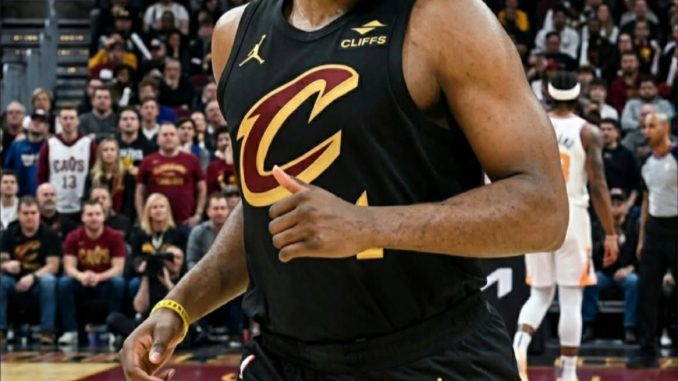
James Harden has officially brought the curtain down on one of the most polarizing, prolific, and stylistically influential careers in modern basketball history, announcing his retirement after a remarkable 17-year journey through the NBA that spanned six franchises and reshaped how the game is played on the perimeter. The announcement, delivered in a composed but emotional statement early Thursday morning, immediately sent shockwaves across the basketball world, closing a chapter defined by scoring brilliance, offensive innovation, playoff scrutiny, reinvention, and an enduring legacy that will be debated for generations.
For nearly two decades, Harden stood as one of the league’s most unstoppable offensive forces, a left-handed maestro whose step-back jumper became a signature weapon and a symbol of an era in which spacing, isolation basketball, and high-volume shot creation reached unprecedented heights. From his early days as a Sixth Man in Oklahoma City to his MVP peak in Houston and his later reinventions in Brooklyn, Philadelphia, and Los Angeles, Harden’s career traced the evolution of modern NBA offense itself.
“This game gave me everything,” Harden said in his farewell statement. “The battles, the friendships, the criticism, the growth—every stop shaped who I am. I gave everything I had every night, and I leave proud of what I built.”
Drafted third overall in 2009, Harden entered the league as a promising but largely unheralded guard behind a young Oklahoma City core that included Kevin Durant and Russell Westbrook. In Oklahoma City, he quickly established himself as a dynamic playmaker and elite bench scorer, winning the 2012 Sixth Man of the Year award and helping the Thunder reach the NBA Finals that same season. Though they fell short against Miami’s “Big Three,” Harden’s emergence marked the beginning of a new offensive archetype: a guard capable of both orchestrating an offense and punishing defenses in isolation.
His move to Houston would define the central arc of his career. Traded in a decision that shocked the league, Harden transformed from promising co-star to offensive centerpiece almost overnight. In Houston, he became a scoring machine without precedent in modern basketball. Year after year, he led the league in usage, free throws, and step-back threes, while evolving into a full-time point guard responsible for controlling the entire offensive system.
It was there that Harden reached his peak, capturing the 2018 NBA Most Valuable Player Award and producing seasons that statisticians still struggle to contextualize. Night after night, he delivered 30-, 40-, and even 50-point performances with a methodical rhythm that felt both inevitable and unstoppable. His partnership with head coach Mike D’Antoni turned Houston into an offensive laboratory, pushing pace, space, and analytics-driven shot selection to their extreme limits.
Yet for all the regular-season dominance, postseason heartbreak became a recurring theme. Several Houston teams fell short of the Finals, often at the hands of Golden State’s dynasty. Those defeats, while painful for Harden and Rockets fans, did little to diminish his individual brilliance. Instead, they fueled ongoing debate about his place among the all-time greats—an argument that followed him through every subsequent stop.
A dramatic shift came when Harden forced his way to Brooklyn, forming a superstar trio alongside Kevin Durant and Kyrie Irving. Expectations were astronomical, but injuries, limited continuity, and external turbulence prevented the group from fully realizing its potential. Still, in flashes, Harden showcased a new dimension of his game: a true floor general, leading the league in assists and proving he could adapt his identity to fit elite talent around him.
His time with the Nets, though brief in the grand scope of his career, underscored one of Harden’s defining traits—adaptability. Where once he was purely a scorer, he evolved into one of the most creative passers in the league, orchestrating offenses with a veteran’s patience and vision. That reinvention carried into Philadelphia, where he joined Joel Embiid in pursuit of a long-coveted championship.
In Philadelphia, Harden again adjusted his role, balancing scoring bursts with playmaking responsibilities. He delivered crucial playoff performances and multiple signature moments, including late-game heroics that reminded fans of his Houston peak. Yet once again, the ultimate prize eluded him, as the 76ers fell short in the postseason despite high expectations and strong regular-season campaigns.
His final NBA stop came in Los Angeles with the Clippers, where he reunited with veteran stars in a bid to chase a title in the Western Conference. Though no longer the nightly 40-point scorer of his Houston prime, Harden embraced a more measured role, blending veteran leadership with flashes of brilliance. His presence stabilized offenses, elevated teammates, and added one last layer to a career defined by constant reinvention.
Across 17 seasons, Harden’s résumé became one of the most decorated in league history: multiple scoring titles, an MVP award, countless All-Star selections, and a statistical footprint that places him among the greatest offensive guards the game has ever seen. He finishes his career among the top in scoring, assists, and free throws made, a reflection of both his longevity and his relentless ability to pressure defenses.
But Harden’s legacy has always extended beyond numbers. He changed how defenses were structured, how fouls were interpreted, and how isolation basketball was valued in the modern era. His step-back three-pointer became so influential that it was widely adopted across the league, reshaping training regimens for guards at every level. Even critics who questioned his playoff shortcomings acknowledged his transformative impact on offensive philosophy.
Reactions poured in immediately following his announcement. Former teammates, coaches, and rivals alike praised his creativity and durability. Many described him as one of the most difficult players to prepare for in NBA history, citing his combination of strength, footwork, and deceptive pace as virtually unmatched in one-on-one situations. Analysts noted that while his style often divided opinion, few players in the history of the sport have been as individually productive for as long.
For Houston fans, Harden’s retirement closes a particularly emotional chapter. His years with the Rockets remain some of the most successful in franchise history, defined by sustained contention and record-breaking offensive output. In Brooklyn, Philadelphia, and Los Angeles, his legacy is more complex but no less significant—each stop adding a new layer to a career that constantly evolved under pressure and expectation.
As the league transitions into a new era dominated by rising stars and positionless basketball, Harden’s influence is still clearly visible. Guards today emulate his step-back mechanics, his manipulation of defensive spacing, and his ability to control tempo through isolation reads. Even as he steps away from the game, his imprint remains embedded in its structure.
In his farewell message, Harden reflected on the journey with characteristic humility and perspective. “I didn’t always get the ending I wanted,” he said, “but I got a career I could never have dreamed of. I competed against the best, I learned from every loss, and I leave knowing I gave everything I had to this game.”
For a player who lived at the center of basketball’s modern transformation, the end of James Harden’s career marks more than a retirement—it signals the closing of an era defined by offensive evolution, statistical revolution, and one of the most unique offensive geniuses the sport has ever seen.
Be the first to comment