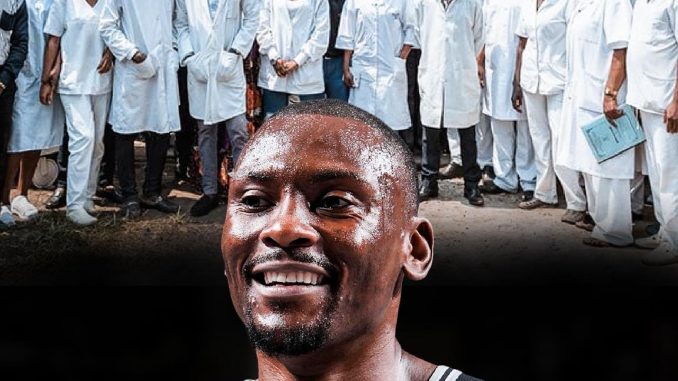
For more than a decade, Bismack Biyombo has built a reputation in the NBA as one of basketball’s toughest and most selfless veterans. Known for his relentless defense, rebounding, and professionalism, Biyombo carved out a long career that saw him suit up for franchises such as the Charlotte Hornets, Toronto Raptors, Orlando Magic, Phoenix Suns, and Memphis Grizzlies. Over the course of that journey, he earned nearly $99 million in NBA salary, a remarkable achievement for a player who arrived in the league from the Democratic Republic of the Congo with little more than raw talent, towering athleticism, and an unwavering belief that basketball could become a bridge to something bigger than himself.
Yet despite the millions, the playoff appearances, and the respect he gained across the league, Biyombo’s legacy may ultimately have nothing to do with blocked shots or double-doubles. Instead, it may be remembered for a deeply personal act of generosity that has touched lives far beyond the basketball court. In one of the most emotional and inspiring gestures ever made by an active NBA player, Biyombo reportedly donated his entire $1.3 million salary to help build a hospital in the Democratic Republic of the Congo, honoring the memory of his late father.
The story behind the donation reveals far more than a wealthy athlete giving back. It speaks to grief, family, responsibility, and a promise made long before the cameras arrived. Biyombo’s father, François Biyombo, played a defining role in shaping the man and athlete the NBA came to know. Throughout Bismack’s rise from Congo to the world’s biggest basketball stage, his father remained a constant source of encouragement and discipline. Friends and teammates have long described Biyombo as grounded and humble despite the wealth and fame that came with professional sports, and much of that perspective came from the values instilled by his family.
When François Biyombo passed away, the loss devastated the veteran center. Those close to him said it changed the way he viewed both basketball and life. For many athletes, success in professional sports becomes measured by championships, contracts, and accolades. For Biyombo, however, the tragedy sharpened his focus on purpose. He began speaking more openly about using his platform to impact communities in Africa, especially in places where access to healthcare remains limited.
That vision eventually materialized in the form of a hospital project dedicated to his father’s memory. Rather than simply attaching his name to a charitable initiative, Biyombo took an extraordinary step by giving away his entire salary to help finance the project. In an era where athlete contracts are often discussed through the lens of luxury purchases, endorsements, and social media extravagance, Biyombo’s decision stood out as a rare reminder that sports wealth can also become a vehicle for transformational change.
The Democratic Republic of the Congo continues to face enormous healthcare challenges, particularly in underserved communities where hospitals, medical equipment, and trained professionals are often scarce. For countless families, even basic medical care can be difficult to access. Biyombo understood those realities firsthand. Before becoming an NBA player, he experienced the struggles that many Congolese families endure daily. He knew what it meant to grow up in an environment where opportunities were limited and essential services could not always be taken for granted.
That personal connection made the hospital project more than philanthropy. It became a mission rooted in lived experience. According to those familiar with Biyombo’s efforts, the facility was designed not only to provide treatment but also to improve long-term healthcare accessibility for local communities. The emotional weight behind the initiative resonated across the basketball world almost immediately.
Players, coaches, and fans flooded social media with praise after news of the donation spread. Around a league often dominated by debates over trades, rivalries, and contracts, Biyombo’s act became a unifying story. Many pointed out that while superstar names usually dominate headlines, some of the league’s most meaningful contributions come quietly from veterans who rarely seek attention for their charitable work.
Several current and former NBA players publicly applauded Biyombo’s sacrifice, describing it as one of the most selfless gestures they had ever seen from a professional athlete. Others noted that the decision reflected the character he had displayed throughout his career. Teammates have frequently described Biyombo as a locker-room leader whose priorities extend beyond basketball. Coaches praised his maturity and the example he sets for younger players entering the league.
For Biyombo himself, however, the project was never about public praise. In past interviews discussing charitable work, he emphasized the importance of responsibility and gratitude. He often spoke about how basketball changed his life and how he felt obligated to create opportunities for others whenever possible. His commitment to Africa has been evident for years through various humanitarian efforts, but the hospital initiative represented his most profound undertaking yet.
The emotional symbolism behind dedicating the hospital to his father added another layer to the story. Around the sports world, athletes frequently honor parents through tattoos, jersey tributes, or emotional speeches. Biyombo chose to honor his father by building something capable of saving lives for generations. It was a gesture that transformed personal grief into collective hope.
The timing of the donation also amplified its impact. Conversations surrounding athlete activism and philanthropy have grown significantly in recent years, with many professional players becoming increasingly involved in social causes. From educational initiatives to criminal justice reform and community development, athletes today are using their platforms in more expansive ways than ever before. Still, even within that larger movement, Biyombo’s decision felt uniquely powerful because of the scale of sacrifice involved.
A $1.3 million salary may not compare to the massive earnings of the NBA’s biggest superstars, but for most players it still represents life-changing money. Donating every dollar of it underscored how deeply personal the mission was for Biyombo. It was not a symbolic contribution or a percentage of excess wealth. It was a complete commitment.
The reaction from fans across Africa proved especially emotional. In Congo and throughout the continent, Biyombo has long represented far more than an NBA player. He symbolizes possibility. His rise from Congo to the NBA inspired countless young athletes who dream of using sports as a pathway to education, stability, and global opportunity. By reinvesting his earnings into healthcare infrastructure back home, he strengthened that connection even further.
Many supporters described the donation as an example of true leadership, noting that Biyombo never forgot where he came from despite years spent competing on basketball’s biggest stages. Others pointed out that his actions challenged stereotypes about professional athletes and celebrity culture. Rather than distancing himself from the struggles of his homeland, Biyombo leaned directly into them.
Throughout NBA history, several players have become known for transformative charitable contributions. Legends like Dikembe Mutombo built hospitals and funded humanitarian efforts across Africa, while stars such as LeBron James and Stephen Curry have invested heavily in education and community programs in the United States. Biyombo’s gesture inevitably drew comparisons to those icons, particularly Mutombo, another Congolese basketball giant celebrated for his humanitarian legacy as much as his Hall of Fame career.
Like Mutombo before him, Biyombo demonstrated how athletes from Africa are increasingly using global sports success to create lasting change back home. The parallels between the two centers are striking. Both became elite defenders in the NBA. Both carried immense pride in their Congolese heritage. And both ultimately viewed basketball not simply as entertainment, but as a platform for service.
What separates Biyombo’s story, however, is the intensely personal motivation behind the hospital project. This was not merely charity attached to a brand strategy or offseason initiative. It was a son fulfilling a promise to his father. Every brick, every hospital room, and every patient treated becomes part of a living tribute to the man who helped guide him to the NBA.
In many ways, Biyombo’s journey reflects the broader evolution of athlete identity in modern sports. Today’s players are no longer defined solely by statistics or championships. Fans increasingly admire athletes for authenticity, values, and social impact. Biyombo’s story resonated because it combined all three. It reminded people that professional athletes can still use extraordinary success to address deeply human problems.
The hospital project also reignited discussions about healthcare inequality in parts of Africa and the role wealthy athletes can play in addressing those gaps. While one player alone cannot solve systemic issues, initiatives like Biyombo’s can create meaningful local change and inspire broader action from governments, organizations, and other public figures.
For young NBA players entering the league, Biyombo’s example may become one of the most powerful lessons imaginable. Professional sports often bring sudden wealth and fame, along with endless pressure to maximize contracts and endorsements. Biyombo showed that legacy can be measured differently. Long after rebounds and blocked shots fade from memory, lives impacted through compassion and service endure.
As his playing career moves into its later stages, Biyombo may never receive the same spotlight reserved for perennial All-Stars or MVP candidates. He has spent much of his career doing the gritty, uncelebrated work that helps teams win: protecting the rim, setting screens, battling for rebounds, and bringing energy off the bench. Ironically, that same selflessness now defines the most important chapter of his life away from basketball.
Around the NBA community, the story continues to resonate because it feels increasingly rare in modern professional sports. At a time when headlines are often consumed by contract disputes, trade demands, and social media controversies, Biyombo offered something refreshingly different: perspective. He reminded fans that behind the business of sports are human beings capable of extraordinary generosity.
For families in the Democratic Republic of the Congo who may one day receive care inside the hospital he helped build, Biyombo’s contribution is far more than a headline. It could mean access to treatment, lifesaving procedures, or medical support that otherwise may not have existed. That reality gives the gesture a significance no stat line can fully capture.
In honoring his father, Bismack Biyombo ultimately created a story that transcends basketball itself. The millions he earned in the NBA brought him security and recognition, but his decision to give away an entire $1.3 million salary revealed something far more valuable: character. In a league filled with remarkable athletes, Biyombo showed the world what true greatness can look like when success is matched with compassion, humility, and purpose.
Be the first to comment