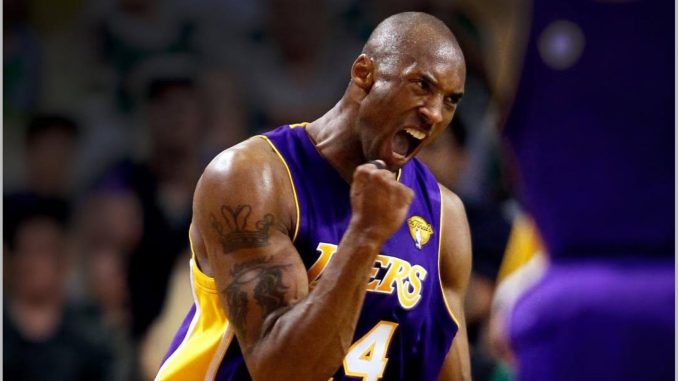
The debate has never really cooled. It resurfaces in barbershops, in late-night basketball arguments, in analytics-driven think pieces, and in quiet moments when the sport pauses long enough to reflect on its own mythology. What if the Black Mamba never fell?
What if Kobe Bryant had never suffered the torn Achilles tendon on April 12, 2013 — the injury that didn’t just end a game, but, in many ways, altered the trajectory of an entire basketball era?
For some, it remains one of the most defining “what if” moments in modern sports history. Not because injuries are rare — they are not — but because of when it happened, how it happened, and who it happened to. Bryant was 34, still performing at an elite level, still carrying the weight of championship expectations in Los Angeles, still operating with the relentless conviction that separated him from nearly every peer of his generation. And then, in one explosive step against Golden State, everything changed.
The basketball world remembers the scene with cinematic clarity. Bryant driving hard to the basket, planting his left foot, and suddenly collapsing without contact. No collision. No dramatic foul. Just a rupture that silenced an arena and, for many fans, signaled the beginning of the end of an era they weren’t ready to lose.
But the debate has never been about what happened. It has always been about what might have happened if it didn’t.
At the center of the conversation is a simple but powerful question: how many more championships could Kobe Bryant have realistically won if his Achilles had held?
At the time of the injury, the Lakers were already struggling with inconsistency and aging pieces. Dwight Howard’s lone season in Los Angeles had been turbulent, and the roster around Bryant was far from championship-caliber. Yet those who watched closely saw something else entirely — not a declining superstar, but a master adapting his game in real time.
Bryant had already begun transitioning away from pure athletic dominance. The explosive, skywalking version of his early 2000s self had evolved into a more methodical, footwork-heavy scorer, relying on angles, timing, and midrange precision. His post game had become one of the most refined in league history. Even as his minutes increased and his usage skyrocketed due to roster instability, his skill level remained unmistakably elite.
That context fuels the argument that if the Achilles injury never occurred, Bryant might have extended his prime longer than many expect.
Some analysts believe he had at least two more highly productive seasons left — perhaps more if managed carefully. In a league that was, at the time, transitioning toward pace-and-space but not yet fully dominated by it, a healthy Bryant could still bend defenses with midrange mastery and late-game shot creation. The Lakers, with proper roster adjustments, might have remained fringe contenders in the Western Conference longer than their actual post-2013 collapse suggested.
But the championship debate is more complicated.
By 2013, the Western Conference had already begun shifting. San Antonio was still a model of sustained excellence. Oklahoma City was ascending behind Kevin Durant and Russell Westbrook. Golden State was on the verge of a dynasty transformation that would redefine modern basketball. Even if Bryant had stayed healthy, the path to another ring would have required navigating a far more loaded landscape than the one he conquered in the mid-2000s.
Still, skeptics underestimate something crucial: Kobe Bryant’s competitive longevity was not built on physical supremacy alone. It was built on adaptability.
Those who played against him and studied him often describe his late-career approach as surgical. He no longer needed to outrun defenders — he needed to outthink them. He studied tendencies obsessively. He mastered pace manipulation. He weaponized patience in ways younger players struggled to decode.
Which is why the “what if” conversation often expands beyond championships and into legacy ranking itself.
Had Bryant remained healthy, he likely would have continued climbing all-time scoring lists at a faster rate. He may have pushed deeper into the 35,000-point conversation, depending on usage and role evolution. He could have extended his career beyond 2016, potentially overlapping longer with the rise of Stephen Curry and the new offensive era that emphasized efficiency over volume isolation scoring.
That overlap is where the alternate-history debate becomes especially fascinating.
Would Bryant have adapted further into a secondary offensive role on a retooled Lakers roster, similar to how veteran superstars later embraced reduced usage to chase one final title run? Or would he have continued as the primary offensive engine, preserving the “Mamba” identity that defined his greatness?
Those questions matter because Bryant’s career was never just about production — it was about identity. He was the league’s most relentless competitor, a player who famously modeled his mindset after Michael Jordan and treated every possession as a referendum on discipline and willpower.
In that sense, the Achilles injury didn’t just affect his body. It forced a philosophical shift. The version of Bryant that returned for his final seasons was still fiercely competitive, still capable of brilliance — but no longer operating with the same physical margin that once allowed him to impose his will nightly.
And yet, even post-injury, he delivered moments that complicate any simple narrative of decline. The 60-point farewell against Utah in 2016 stands as one of the most iconic closing chapters in sports history — a performance that felt less like a victory lap and more like a final assertion of identity.
That performance is often used by those who argue that Bryant’s greatness was never dependent on athletic peak alone. Even diminished physically, he remained capable of controlling a game through sheer force of basketball intellect and competitive spirit.
Which circles back to the central “what if.”
If the Achilles injury never happened, would Bryant have added another championship to his résumé? Would he have extended his scoring legacy to unreachable heights? Or would the realities of roster construction and Western Conference evolution have still limited his ceiling regardless of health?
There is no definitive answer — only competing interpretations shaped by how one views greatness itself.
Some see Bryant as a player whose best chance for more titles had already passed after the 2010 championship run. Others believe that with a healthier supporting cast and better organizational decisions, his leadership could have extended the Lakers’ contention window deeper into the 2010s.
What is not debated is the impact of the injury itself. It marked a turning point not only for Bryant but for the Lakers franchise and the broader NBA landscape. A generational icon shifted from active dominance into legacy preservation mode almost overnight.
And yet, perhaps that is where Bryant’s story gains its most enduring power. The Achilles rupture did not diminish the myth — it intensified it. It added a layer of fragility to a career defined by invincibility. It forced fans to confront the reality that even the most disciplined, obsessive, and prepared athlete is still bound by human limits.
In the end, the “what if the Black Mamba never fell” debate will never reach closure. It exists in the space between imagination and evidence, between statistical projection and emotional memory. It lives in highlight reels that feel unfinished and in alternate timelines that stretch endlessly in the minds of basketball fans.
Because with Kobe Bryant, even absence became part of the story.
And in that sense, the injury that changed NBA history did not simply end a chapter — it created one of the most enduring debates the sport has ever known.
Be the first to comment