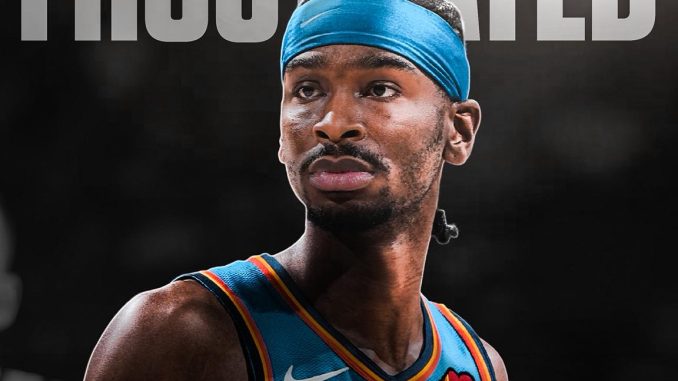
The pressure of the Western Conference Finals has transformed every possession into a battle of nerves, physicality, and emotional swings, and no player has carried that burden more heavily than Shai Gilgeous-Alexander. Even after leading the Oklahoma City Thunder to a pivotal 127-114 Game 5 victory over the San Antonio Spurs, the Thunder superstar walked away visibly frustrated, directing much of his postgame emotion toward the officiating that once again became a major storyline in the series.
The win pushed Oklahoma City ahead 3-2 in the Western Conference Finals and placed the Thunder just one victory away from reaching the NBA Finals, but the mood surrounding the team after the game was anything but celebratory. Gilgeous-Alexander, who has spent the entire postseason battling through double teams, aggressive defensive schemes, and relentless scrutiny over his ability to draw fouls, did not hold back while discussing how the game was called.
Despite finishing with another dominant performance that helped Oklahoma City reclaim control of the series, Gilgeous-Alexander appeared irritated by what he believed was inconsistency from the officials throughout the night. Several heated exchanges occurred during the game, including moments where the Thunder star argued after drives to the basket that resulted in heavy contact without whistles. At one point late in the third quarter, cameras caught him shaking his head in disbelief while speaking to referees during a timeout as the tension inside Paycom Center continued to rise.
That frustration reflected the broader tone of a series that has steadily become more physical with every game. What began as a showcase between two young rising powers in the Western Conference has evolved into a bruising confrontation defined by hard fouls, emotional reactions, and constant debates about officiating standards. The matchup between Gilgeous-Alexander and Victor Wembanyama has captivated basketball fans across the league, but the discourse around foul calls has become almost as prominent as the basketball itself.
For Gilgeous-Alexander, the scrutiny has followed him throughout the playoffs. Critics have repeatedly argued that his scoring efficiency is heavily aided by free throws, while Thunder supporters counter that his unique ability to change pace and attack defenders naturally creates contact. In Game 5, he once again found himself at the center of that debate. Every drive to the rim seemed to spark reactions from both benches, with Spurs players throwing their arms up in frustration after whistles and Thunder players responding angrily when calls went the other direction.
Yet amid all the noise surrounding officiating, Gilgeous-Alexander still delivered the type of performance that has elevated him into the MVP conversation and cemented him as one of the NBA’s premier playoff performers. He controlled the tempo from the opening quarter, repeatedly collapsing San Antonio’s defense with his hesitation dribbles and surgical midrange game. Whenever the Spurs threatened to cut the deficit, Oklahoma City responded by putting the ball back in Gilgeous-Alexander’s hands.
The Thunder star attacked relentlessly in transition and punished mismatches in isolation, showing why Oklahoma City has become one of the league’s most dangerous late-game teams. His composure offensively contrasted sharply with the visible irritation he displayed toward officials, creating an emotional duality that perfectly captured the intensity of the moment.
Oklahoma City needed every bit of that aggression after San Antonio entered Game 5 with significant momentum following its convincing victory in Game 4. The Spurs had tied the series behind a dominant defensive performance and appeared to shift the psychological balance heading back to Oklahoma City. Questions suddenly surrounded whether the Thunder’s young core could respond under immense pressure against a Spurs team that looked increasingly confident.
Instead, Oklahoma City answered emphatically. The Thunder played with urgency from the opening tip, pushing the pace and forcing San Antonio into uncomfortable defensive rotations. Gilgeous-Alexander set the tone early by attacking the paint repeatedly, while Oklahoma City’s supporting cast provided the secondary scoring needed to prevent the Spurs from loading up entirely on their superstar guard.
Still, San Antonio never disappeared. Wembanyama once again showcased why many already view him as the future face of the league. The 7-foot-4 phenomenon delivered another spectacular all-around performance, impacting the game defensively with his rim protection while also stretching Oklahoma City’s defense offensively. Every time the Thunder looked ready to create separation, Wembanyama responded with a momentum-changing play, whether it was a deep three-pointer, a soaring block, or a difficult finish in traffic.
The battle between Gilgeous-Alexander and Wembanyama has become the defining image of this series. One represents the polished superstar entering his prime, while the other embodies the league’s next generational force. Their contrasting styles have created a fascinating chess match: Gilgeous-Alexander relying on craft, rhythm, and footwork, and Wembanyama countering with unprecedented length, versatility, and defensive instincts.
Game 5 only intensified that rivalry. At several moments, the two exchanged words after physical plays near the basket. Neither backed down emotionally, and the crowd fed off every confrontation. By the fourth quarter, the game carried the atmosphere of something much larger than a typical playoff contest. Every whistle drew deafening reactions, every missed call sparked outrage, and every possession felt capable of altering the direction of the series.
Gilgeous-Alexander’s postgame comments reflected the cumulative frustration of enduring that environment night after night. While careful not to cross the line into outright criticism that could trigger league discipline, he made it clear he believed consistency from the officiating crew remained an issue. His tone suggested exhaustion with the constant conversations surrounding foul calls rather than appreciation for the victory itself.
That mentality has become part of what defines elite playoff competitors. Great players often find themselves dissatisfied even after wins because their focus immediately shifts toward the next challenge. For Gilgeous-Alexander, the reality is simple: Oklahoma City still has not finished the job.
The Thunder understand how dangerous San Antonio remains heading into Game 6. The Spurs have already proven capable of bouncing back after disappointing losses, and their confidence continues to grow with every game Wembanyama dominates. Head coach Mark Daigneault acknowledged after Game 5 that Oklahoma City cannot afford emotional distractions moving forward, especially with the series returning to San Antonio for a potentially hostile elimination game atmosphere.
That challenge becomes even greater when considering how emotionally draining the series has become. Players on both teams have absorbed hard contact throughout the matchup, and the physical exhaustion is beginning to show. Bodies are battered, tempers are shorter, and every small moment now carries amplified significance.
For Oklahoma City, Gilgeous-Alexander’s leadership remains the stabilizing force amid the chaos. His ability to maintain offensive control despite constant defensive pressure has elevated the Thunder throughout the postseason. Teammates repeatedly praise his calm demeanor and confidence in high-pressure moments, traits that have transformed Oklahoma City from a rebuilding project into a legitimate championship contender.
Yet Game 5 also revealed how emotionally invested he has become in this pursuit. The frustration directed at officiating stemmed partly from how desperately he wants to win. Every non-call felt personal because every possession now carries championship implications. The Thunder are no longer simply a promising young team exceeding expectations; they are chasing a Finals appearance, and Gilgeous-Alexander knows opportunities like this cannot be taken for granted.
The Spurs, meanwhile, appeared equally irritated with the officiating from the opposite perspective. Several San Antonio players spent portions of the night visibly upset over the number of foul calls Gilgeous-Alexander generated while driving to the basket. Spurs head coach Gregg Popovich largely avoided directly criticizing officials publicly, but his sideline reactions during key stretches of the game told a different story.
That disagreement over officiating has become one of the central tensions of the series. Oklahoma City believes Gilgeous-Alexander earns his whistles through elite shot creation and constant pressure on the rim. San Antonio believes some of the calls reward exaggerated contact initiated by the Thunder star. The truth likely exists somewhere in between, but the debate continues to intensify as the stakes rise.
What cannot be debated is Gilgeous-Alexander’s overall brilliance throughout the playoffs. He has consistently produced under immense pressure while carrying enormous offensive responsibility. Defenses know exactly where the ball is going late in games, yet stopping him remains incredibly difficult. His patience, footwork, and ability to manipulate defenders have turned him into one of basketball’s most complete scorers.
Game 5 provided another reminder of that reality. Even during stretches where frustration threatened to distract him, Gilgeous-Alexander still controlled the game offensively. He repeatedly found seams in San Antonio’s defense, punished defenders in isolation, and created opportunities for teammates when help defenders collapsed.
The Thunder’s supporting cast also deserves significant credit for responding after the disappointment of Game 4. Oklahoma City received key contributions from multiple role players, helping ease the pressure on Gilgeous-Alexander and preventing San Antonio from focusing entirely on him defensively. That balance has often determined the outcome of the series. When Oklahoma City receives consistent secondary scoring, the Thunder become extremely difficult to contain.
Still, the overarching image from Game 5 remains Gilgeous-Alexander’s visible irritation despite the victory. In many ways, it perfectly symbolizes the intensity of playoff basketball at this stage. Winning alone is not enough when players believe crucial moments are being impacted by inconsistent whistles. Emotions inevitably spill over because the margin between advancing and elimination is razor thin.
Now the series shifts back to San Antonio with Oklahoma City holding the advantage but understanding the challenge ahead. The Spurs have shown resilience throughout the postseason and possess the type of transcendent talent in Wembanyama capable of forcing a Game 7 almost single-handedly. The Thunder know closing out a conference finals on the road represents one of the hardest tasks in basketball.
For Gilgeous-Alexander, the focus will likely remain on balancing emotion with execution. His passion fuels Oklahoma City’s competitive edge, but maintaining composure will be critical as the pressure intensifies further. Every possession in Game 6 will carry enormous weight, and officiating will almost certainly remain under the microscope once again.
Whether fans view him as a master foul-drawer or simply an unstoppable scorer who invites contact through relentless aggression, Gilgeous-Alexander continues to dominate the playoff stage. His Game 5 performance pushed the Thunder within one win of the NBA Finals, even if the postgame mood suggested anything but satisfaction.
The Western Conference Finals have become a war of attrition, and the emotional temperature rises higher with each passing game. Oklahoma City now stands one step away from the sport’s biggest stage, but Gilgeous-Alexander’s frustration after victory served as a reminder that nothing about this journey has come easily. The Thunder may hold the series lead, but peace of mind remains impossible to find in a battle this intense.
Be the first to comment