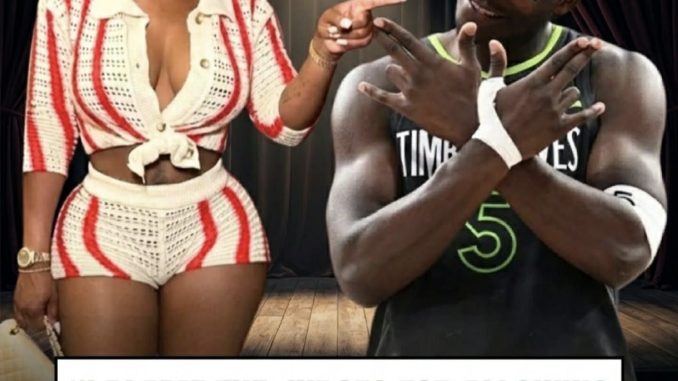
A developing report involving Minnesota Timberwolves star Anthony Edwards has sent shockwaves through the NBA landscape and beyond, after claims surfaced that the All-Star guard allegedly agreed to an unprecedented upfront child support arrangement totaling $1.08 million—purportedly structured to cover obligations across 18 years in a single lump-sum payment. The report, which remains unverified by official court documentation at the time of publication, has already ignited a fierce public debate over family law, athlete finances, and the boundaries of private settlement agreements in high-profile custody cases.
According to the initial claims circulating across social media and entertainment outlets, Edwards allegedly opted for a front-loaded financial arrangement rather than traditional periodic child support payments. The figure—$1.08 million—has been widely interpreted online as a calculation intended to represent a long-term support commitment condensed into an immediate settlement. While details remain unclear, including whether the amount reflects court-ordered obligations, a negotiated agreement, or a private settlement between parties, the report has already become one of the most discussed off-court NBA storylines of the week.
At the center of the conversation is Ayesha Howard, who is reported to have publicly described the arrangement as an “injustice,” arguing that the structure of the payment may not adequately reflect long-term financial realities associated with raising a child over nearly two decades. Her remarks, widely shared across platforms including X, Instagram, and TikTok, have fueled a rapidly escalating discourse that blends legal interpretation with emotional reaction and broader societal commentary on wealth, responsibility, and gender dynamics in high-profile custody disputes.
Edwards, one of the NBA’s brightest young stars and a cornerstone of the Timberwolves’ franchise identity, has not publicly addressed the allegations in detail. As of now, there has been no official statement from his camp confirming or denying the specifics of the reported $1.08 million arrangement. The lack of clarity has only intensified speculation, with fans and commentators dissecting every angle of what such a settlement—if accurate—could mean both legally and financially for a player still in the prime of his career.
The figure itself has become a lightning rod. Some analysts argue that a lump-sum child support payment, if legally structured and mutually agreed upon, could provide financial certainty for both parties and eliminate prolonged legal disputes. Others, however, have questioned whether a single upfront payment can realistically account for the evolving costs of childcare, education, healthcare, housing, and inflation over an 18-year span. The debate has extended far beyond sports media, drawing in family law commentators who emphasize that child support systems are typically designed around periodic reassessments precisely because financial needs change over time.
Within NBA circles, the situation has also raised familiar concerns about the off-court pressures that accompany sudden wealth and fame. Edwards, who entered the league as the No. 1 overall pick and quickly ascended into All-NBA conversations, has long been viewed as a generational talent with franchise-altering potential. But like many high-profile athletes, his public image has increasingly intersected with personal legal matters that attract significant media scrutiny. The current controversy adds another layer to the ongoing discussion about how young stars navigate financial responsibilities while under the constant spotlight of professional sports.
Social media reaction has been immediate and deeply divided. One faction of users has defended the alleged arrangement, arguing that a guaranteed upfront payment could provide stability and remove uncertainty for all parties involved. “If the money is guaranteed and properly managed, it’s actually more secure than chasing payments for 18 years,” one widely circulated post read. Others have strongly disagreed, suggesting that the figure undervalues the long-term cost of raising a child in modern economic conditions, especially given rising inflation and the unpredictability of future expenses.
The emotional tone of the debate intensified further after Ayesha Howard’s reported comments describing the situation as unfair. Supporters echoed her sentiment, arguing that lump-sum settlements in family law cases can sometimes favor the higher-earning party, particularly when long-term projections are difficult to verify or enforce. Critics, however, pushed back, suggesting that without full transparency into the agreement’s structure, it is impossible to determine whether the outcome is unjust or simply unconventional.
Financial experts weighing in online have pointed out that lump-sum child support agreements are rare but not unheard of, particularly among high-net-worth individuals. In theory, such arrangements may involve discounted present-value calculations, where future payments are reduced to reflect current lump-sum worth. However, experts also caution that these agreements often require careful legal safeguards, including trust structures, investment provisions, and contingency clauses to account for unforeseen life changes.
What has further complicated the conversation is the viral nature of the report itself. The initial claim spread rapidly across sports blogs and influencer accounts, often without consistent sourcing or official documentation. As the story gained traction, it evolved from a financial report into a broader cultural talking point about celebrity accountability, wealth distribution, and the public’s appetite for personal stories involving elite athletes.
Within the NBA ecosystem, the timing of the controversy is particularly sensitive. Edwards is widely expected to be one of the league’s defining faces over the next decade, and the Timberwolves organization has invested heavily in building a championship-contending roster around him. Off-court narratives, especially those involving legal or financial disputes, have historically influenced public perception of star players, even when unrelated to on-court performance.
Former players and media analysts have also weighed in indirectly through commentary on similar past situations, noting that professional athletes often face unique challenges when balancing personal responsibilities with sudden financial windfalls. The combination of youth, rapid income escalation, and constant public scrutiny creates an environment where private matters can quickly become public controversies.
Despite the noise, there remains a significant amount of uncertainty surrounding the core facts of the report. No court filings have been widely verified, and no legal representatives have publicly confirmed the structure or legitimacy of the alleged $1.08 million agreement. As a result, much of the current discourse exists in a gray area between reported claims and social media interpretation.
Still, the story has already taken on a life of its own. On sports talk shows, radio segments, and digital platforms, the alleged arrangement is being dissected not just as a legal matter but as a cultural moment reflecting the intersection of money, fame, and personal responsibility in modern professional sports. The speed at which the narrative has spread highlights how quickly off-court developments involving major athletes can dominate the sports conversation, sometimes rivaling on-court performances in attention and engagement.
For Edwards, the focus will inevitably shift back to basketball as the season progresses, but the lingering questions surrounding the report may continue to follow him unless clarified by official statements or legal documentation. For now, the situation remains unresolved, with competing narratives shaping public opinion in real time.
What is clear, however, is that the alleged $1.08 million upfront child support arrangement has tapped into a broader societal conversation that extends well beyond the NBA. It has become a flashpoint for debates about fairness, financial planning, legal structure, and the responsibilities tied to wealth at the highest levels of professional sports. Whether the report ultimately proves accurate in full, in part, or not at all, its impact on public discourse has already been significant.
As the story continues to circulate, fans, analysts, and commentators alike are left awaiting clarity—both on the specifics of the alleged agreement and on how one of the NBA’s brightest young stars will navigate yet another wave of off-court attention in an increasingly scrutinized career.
Be the first to comment