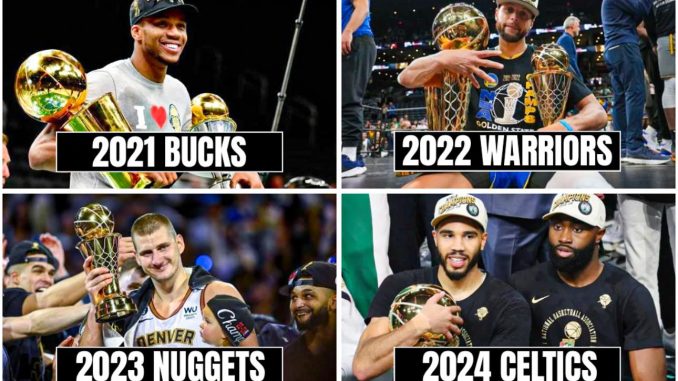
The NBA’s streak of fresh champions is alive and well.
In a league often defined by dynasties, superteams, and repeat title runs, the 2026 postseason has delivered something entirely different. For the eighth consecutive season, the NBA Finals will crown a new champion after the San Antonio Spurs completed a remarkable comeback against the Oklahoma City Thunder, winning Game 7 on the road and advancing to face the New York Knicks in what promises to be one of the most intriguing championship matchups in recent memory.
The Spurs’ 111-103 victory over Oklahoma City in Game 7 capped a dramatic Western Conference Finals that swung wildly from one side to the other before ultimately ending with San Antonio celebrating on the Thunder’s home floor. After trailing three games to two in the series, the Spurs responded with consecutive dominant performances, winning Game 6 at home before carrying that momentum into the decisive finale. Their reward is a date with the Knicks in the NBA Finals, a matchup few predicted at the beginning of the season but one that perfectly reflects the league’s rapidly changing landscape.
For Oklahoma City, the defeat marks a painful end to what had looked like a championship-caliber campaign. The Thunder entered the postseason as one of the league’s most complete teams, powered by their superstar backcourt, elite defense, and the confidence that comes from several years of steady growth. Through much of the Western Conference Finals, they appeared poised to break through and reach the NBA Finals.
Instead, they became the latest contender to fall short in an era where sustained dominance has proven elusive.
The Thunder had seized control of the series with a Game 5 victory that gave them a 3-2 advantage and placed them one win away from the franchise’s first Finals appearance since the Kevin Durant and Russell Westbrook era. But championship basketball often comes down to resilience, and San Antonio displayed plenty of it.
The Spurs entered Game 6 facing elimination. Rather than folding under pressure, they delivered one of their most complete performances of the postseason. Their defense suffocated Oklahoma City’s offense, their ball movement created quality looks throughout the night, and their young stars rose to the occasion. The convincing victory forced a winner-take-all Game 7 and shifted the pressure squarely onto the Thunder.
When the series returned to Oklahoma City, the Spurs brought that confidence with them.
From the opening tip of Game 7, San Antonio looked composed. Every possession carried purpose. Every defensive rotation arrived on time. Every challenge presented by the Thunder was met with an answer.
The game was played at a playoff intensity befitting a conference championship decider. Oklahoma City fed off the energy of its home crowd and repeatedly attempted to create separation, but the Spurs never allowed the moment to become too large. They weathered runs, controlled key stretches of the second half, and made the critical plays necessary to close out the victory.
By the final buzzer, the scoreboard read 111-103 in favor of San Antonio, and the celebration began.
For the Spurs, the victory represents another major milestone in one of the most impressive rebuilds in modern NBA history.
Not long ago, the organization was searching for a new identity following the departures and retirements of the legends who built the franchise’s dynasty. The days of Tim Duncan, Tony Parker, Manu Ginobili, and Gregg Popovich’s championship teams seemed distant. Yet San Antonio remained patient, committed to development, and focused on constructing a sustainable contender.
Everything changed when the franchise landed Victor Wembanyama.
The generational talent has transformed expectations across the organization and accelerated the Spurs’ timeline dramatically. Throughout the playoffs, Wembanyama has delivered performances worthy of his immense reputation, showcasing a combination of skill, size, defensive impact, and basketball intelligence rarely seen in league history.
Against Oklahoma City, his presence was felt on both ends of the floor. Whether protecting the rim, grabbing crucial rebounds, or creating offense during pivotal moments, Wembanyama once again demonstrated why many believe he could become the face of the NBA for the next decade.
But this postseason run has not been solely about one player.
The Spurs have received contributions from throughout their roster. Their supporting cast has embraced its responsibilities, providing shooting, defense, energy, and timely scoring whenever needed. Their collective approach has allowed them to survive multiple playoff battles and ultimately emerge from a loaded Western Conference.
The road to the Finals was anything but easy.
The Western Conference featured several legitimate title contenders, and every round demanded a different adjustment. Yet San Antonio consistently found solutions. They adapted to varying styles, responded to adversity, and improved as the postseason progressed.
That growth became especially evident during the Thunder series.
Oklahoma City’s athleticism, pace, and defensive pressure created challenges throughout the matchup. Several games were decided by small margins, with momentum frequently changing hands. Yet when the season hung in the balance, San Antonio displayed the composure typically associated with veteran championship teams.
Now they stand four wins away from completing one of the fastest ascents in recent league history.
Awaiting them is a Knicks team that has authored a remarkable story of its own.
New York enters the Finals after dominating the Eastern Conference playoffs and completing a sweep of the Cleveland Cavaliers in the conference finals. The Knicks have spent decades chasing a return to basketball relevance. Their passionate fan base endured years of disappointment, coaching changes, roster turnover, and unfulfilled expectations.
This season has been different.
The Knicks established themselves as one of the NBA’s toughest teams, combining elite defense with a relentless competitive edge. Throughout the postseason, they have embraced physical basketball, executed in clutch situations, and consistently found ways to win.
Their sweep of Cleveland sent a powerful message to the rest of the league.
Rather than surviving a lengthy conference finals battle, New York earned valuable rest while waiting for the Western Conference champion to emerge. That extra recovery time could prove significant as the Finals begin.
The matchup itself offers fascinating contrasts.
San Antonio features perhaps the league’s most unique superstar in Wembanyama, whose length and versatility can alter games in countless ways. New York counters with a battle-tested group that prides itself on toughness, rebounding, and collective execution.
The chess match between the coaching staffs will be equally compelling. Every adjustment, rotation decision, and defensive scheme will carry enormous significance. Finals series often turn on details, and both teams have demonstrated throughout the playoffs that they are capable of making those necessary adjustments.
Beyond the basketball, however, the Finals represent something larger for the NBA.
The Spurs-Knicks showdown guarantees that the league will produce an eighth consecutive new champion. In an era where parity has become increasingly common, that statistic underscores just how difficult it has become to build a lasting dynasty.
The streak began years ago and has continued through multiple championship runs by different franchises. Each season has produced a new story, a new champion, and a new celebration.
For fans, the trend has created unprecedented unpredictability.
At the start of every season, a wide range of teams legitimately believe they can compete for a title. The gap between contenders has narrowed. Front offices have become more aggressive. Player movement has reshaped rosters at an accelerated pace. Young stars are reaching elite levels earlier than ever before.
The result is a league where no champion has successfully defended its crown for nearly a decade.
That reality stands in stark contrast to previous eras dominated by extended dynasties.
The NBA once featured championship runs that stretched across multiple seasons. Teams led by legends such as Michael Jordan, Tim Duncan, Kobe Bryant, and Stephen Curry established long-term dominance that defined entire generations of basketball.
Today’s league presents a different challenge.
Talent is distributed more evenly across the NBA. Young franchises rise quickly. Established contenders face constant pressure from emerging threats. Health, depth, and adaptability often matter as much as star power.
The Spurs and Knicks embody that modern reality.
Neither team entered the season as an overwhelming favorite. Both organizations built carefully, trusted their development processes, and steadily improved. Their journeys demonstrate that championship contention is no longer reserved for a small handful of franchises.
Instead, opportunity exists for teams willing to build the right culture and make the necessary investments.
As anticipation builds for Game 1, storylines are everywhere.
Can Wembanyama capture the first championship of what many expect will be a historic career? Can the Spurs complete their transformation from rebuilding project to NBA champion? Can New York end its decades-long title drought and deliver a championship celebration unlike anything the city has seen in generations?
The answers will arrive soon enough.
For now, one fact is certain: the Thunder’s season is over, the Spurs are Western Conference champions, and the NBA’s remarkable streak of new champions will continue.
The Knicks and Spurs have earned the right to compete for basketball’s ultimate prize. One franchise is seeking to add another chapter to its proud history. The other hopes to complete a stunning rise powered by one of the game’s brightest young superstars.
Only one team will lift the Larry O’Brien Trophy.
But regardless of who ultimately prevails, the 2026 NBA season has already reinforced a defining truth about today’s league: there are no repeat kings. The road to a championship remains open, unpredictable, and fiercely contested, and that unpredictability is exactly what has made this era of NBA basketball so captivating.
Be the first to comment