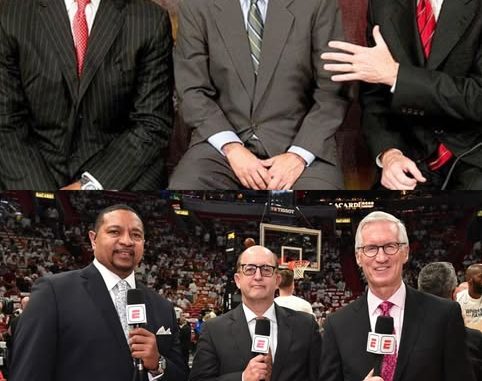
The NBA Finals have always been about more than the action on the hardwood. While championships are ultimately decided by the players and coaches battling for basketball’s ultimate prize, the voices narrating those moments become forever intertwined with the memories fans carry for generations. Every iconic shot, every dramatic comeback, every championship celebration is often remembered not only through the visuals but also through the commentary that accompanied it.
That reality was once again highlighted this week when a wave of nostalgia swept through basketball fans across social media. Amid the excitement of another Finals series, countless supporters found themselves reflecting on an earlier era of NBA coverage, sharing a simple sentiment that resonated across generations: “I wish we could have this broadcast crew back calling the NBA Finals again.”
The statement may seem straightforward, but it speaks to a larger conversation about how sports broadcasting has evolved and the lasting impact legendary commentators have had on the league. For many fans, certain broadcast teams represented the perfect blend of expertise, storytelling, chemistry, and emotion. They didn’t simply describe the game—they elevated it.
Throughout NBA history, iconic commentary crews have become as recognizable as the players they covered. Their voices became the soundtrack to championships, dynasties, and unforgettable moments. Whether it was a buzzer-beater in June, a Game 7 thriller, or a championship-clinching performance, fans often remember exactly who was behind the microphone when history unfolded.
The connection between fans and broadcasters is unique. Players change teams. Coaches come and go. Front-office executives rotate through organizations. But a trusted broadcast crew can remain a constant presence for years, creating a sense of familiarity and comfort for viewers tuning in from around the world.
That emotional attachment helps explain why nostalgia continues to play such a significant role in sports culture. When fans look back at previous NBA Finals broadcasts, they are often remembering more than just the commentators themselves. They are remembering where they were when they watched those games. They are recalling championship runs, family gatherings, and the excitement of witnessing history in real time.
The modern NBA landscape has undergone dramatic transformation over the past two decades. The league has expanded its global reach, embraced social media, and adopted new forms of digital content. Broadcast presentations have evolved alongside those changes, introducing advanced analytics, innovative camera angles, and expanded studio coverage.
Yet despite all the technological advancements, many fans still long for the voices that defined previous eras.
Part of that nostalgia stems from the unique chemistry certain crews developed over years of working together. Great broadcasting is not simply about delivering information. It is about timing, personality, and understanding when to speak and when to allow the moment to breathe.
The best commentary teams knew how to capture the gravity of a championship moment without overshadowing it. They understood that sometimes the most powerful call is the simplest one. A perfectly timed observation or an emotional reaction can become permanently attached to a historic play.
That balance is difficult to achieve, particularly during the NBA Finals, where every possession is magnified and every mistake can be scrutinized. Broadcasters are tasked with serving multiple audiences simultaneously: die-hard basketball enthusiasts seeking tactical insight, casual viewers looking for entertainment, and international fans experiencing the Finals as a global spectacle.
Legendary crews managed to satisfy all of those audiences.
Their broadcasts often blended expert analysis with compelling storytelling. They could break down defensive rotations one moment and provide historical context the next. They connected today’s stars to the legends who came before them, helping viewers understand the significance of what they were watching.
As a result, their calls became part of basketball lore.
The emotional power of sports commentary was evident during countless memorable Finals moments throughout NBA history. Whether celebrating a championship-clinching basket, documenting a record-breaking performance, or narrating a dramatic series comeback, broadcasters played a critical role in shaping how fans experienced those events.
Many of those calls remain instantly recognizable years later. Fans can hear a familiar phrase or signature catchphrase and immediately be transported back to a specific game or season.
That kind of impact is rare in sports.
It requires not only talent but also authenticity. Fans quickly recognize when broadcasters genuinely love the game and respect its history. The most beloved commentary teams possessed that passion. They approached every Finals game with the understanding that they were documenting basketball history in real time.
Their enthusiasm felt natural rather than manufactured.
That authenticity helped create trust with viewers. Fans believed those broadcasters because they knew the commentators had spent decades studying the sport, interviewing players, and covering the league’s biggest moments.
The NBA itself has always recognized the importance of strong storytelling. The league’s greatest stars have often benefited from broadcasters capable of translating their brilliance into narratives that resonate with fans.
From the dominance of legendary dynasties to the emergence of new superstars, broadcasters helped frame the stories that defined entire eras of basketball.
As the current generation of players continues to build its own legacy, the conversation surrounding broadcast coverage remains relevant. Modern commentary teams face challenges that previous generations never encountered. Social media creates instant reactions. Every statement can be analyzed, clipped, and debated within seconds.
The pressure to satisfy a diverse and constantly connected audience has never been greater.
At the same time, today’s broadcasters have access to tools and information that were unimaginable decades ago. Advanced statistics, real-time data, and enhanced production capabilities provide opportunities for deeper analysis and more engaging presentations.
Still, many fans argue that the most important ingredient remains unchanged: chemistry.
No amount of technology can replace the connection viewers feel with a broadcast team that understands the rhythm of the game and the emotions of the moment.
That sentiment is precisely why nostalgic discussions continue to flourish online whenever old Finals clips resurface. Fans aren’t merely comparing production quality or analytical depth. They are comparing feelings.
The broadcasts they remember most fondly often coincide with some of their favorite basketball memories.
For younger fans, those discussions can provide an opportunity to explore previous eras of NBA coverage. Watching archived Finals broadcasts reveals how commentary styles have changed over time. Some crews leaned heavily into storytelling. Others emphasized strategy and analysis. The most successful groups found a way to combine both approaches.
Each era had its own distinctive voice.
Those voices helped shape how fans perceived the league and its stars. They celebrated greatness, contextualized achievements, and occasionally provided the perfect soundtrack for moments that would be replayed for decades.
As another NBA Finals unfolds, the nostalgia surrounding former broadcast crews serves as a reminder of the unique role commentators play in sports culture. They are witnesses to history, storytellers for generations of fans, and trusted guides through the highs and lows of championship competition.
Their influence often extends beyond the games themselves.
Long after the final buzzer sounds and the confetti settles, fans continue to remember the voices that accompanied those moments. A championship-winning shot may belong to the player who made it, but the memory of that shot is often inseparable from the call that followed.
That enduring connection explains why so many fans continue to revisit classic broadcasts and celebrate the crews that delivered them. The desire to hear those familiar voices again isn’t necessarily a criticism of today’s commentators. Instead, it reflects the profound emotional bond sports fans develop with the storytellers who helped define their favorite basketball memories.
Every generation has its iconic broadcast team. Every era produces voices that become synonymous with the sport. And while the NBA continues to evolve, one truth remains constant: great commentary enhances great basketball.
The players provide the drama. The coaches develop the strategy. The fans supply the passion.
But the broadcasters bring those elements together, transforming a game into a shared experience that can be remembered for a lifetime.
That is why the simple wish to see a beloved broadcast crew return to the NBA Finals resonates so strongly. It speaks to the power of storytelling, the importance of tradition, and the lasting influence of voices that became part of basketball history.
For countless fans, those legendary crews were never just commentators. They were companions during championship runs, trusted narrators during unforgettable moments, and an essential part of what made the NBA Finals feel special.
And while time inevitably moves forward, the memories they helped create continue to endure—echoing through highlight reels, archived broadcasts, and the hearts of basketball fans who still find themselves wishing, if only for one more Finals game, that those iconic voices could take their place behind the microphone once again.
Be the first to comment