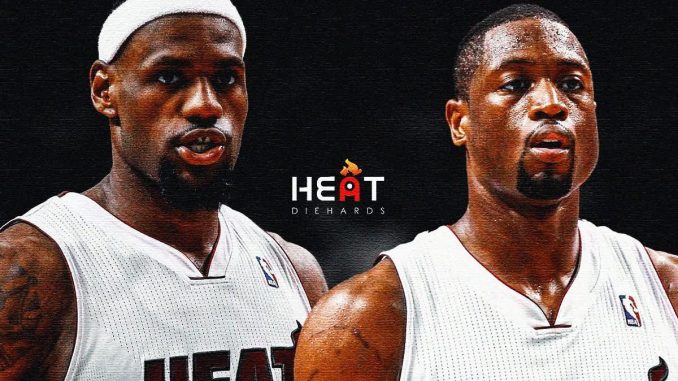
The Miami Heat moved within two victories of an NBA Finals berth after their star-studded trio once again proved too much for the Boston Celtics, overcoming a historic performance from Rajon Rondo to secure a dramatic victory and a commanding 2-0 lead in the Eastern Conference Finals.
In a game that featured everything playoff basketball could offer—superstar shot-making, relentless intensity, momentum swings, and an unforgettable individual display—Miami leaned on the brilliance of LeBron James and Dwyane Wade, who combined for 57 points to spoil what many consider one of the greatest postseason performances of Rondo’s career.
For much of the night, it appeared Rondo was determined to single-handedly prevent Boston from falling into a daunting series hole. The Celtics point guard delivered a masterpiece, pouring in 44 points while orchestrating Boston’s offense with the poise, vision, and fearlessness that had made him one of the league’s premier floor generals. Every time Miami threatened to take control, Rondo responded with another clutch basket, another dazzling drive, or another impossible finish at the rim.
Yet even as Rondo authored a performance for the ages, Miami’s collection of stars ultimately had the final say.
The Heat entered the contest knowing the significance of protecting home court. After narrowly taking Game 1, they understood that Boston, a battle-tested veteran team led by Kevin Garnett and Paul Pierce, would arrive desperate to steal a road win and even the series before heading back to Massachusetts.
From the opening tip, the game carried the feel of a heavyweight fight.
Boston played with urgency and aggression, pushing the pace whenever opportunities arose. Rondo immediately established himself as the focal point of the Celtics’ attack. Whether weaving through defenders for layups or creating open looks for teammates, he dictated the rhythm and forced Miami’s defense into difficult decisions.
The Heat, however, had their own answers.
James set the tone early with his physicality, attacking the basket and putting pressure on Boston’s interior defense. Wade followed suit, displaying the explosiveness and creativity that had defined his playoff career. Together, they repeatedly challenged the Celtics in transition and in half-court situations, ensuring Miami never allowed Boston to build a comfortable cushion.
While the spotlight naturally gravitated toward James and Wade, Miami’s success once again highlighted the impact of the franchise’s celebrated Big Three. Chris Bosh provided critical contributions on both ends of the floor, stretching Boston’s defense and delivering timely scoring whenever the Celtics focused too heavily on slowing Miami’s perimeter stars.
The contest quickly evolved into a showcase of elite talent.
Every possession seemed to carry enormous significance. Boston’s veterans understood the implications of falling behind 2-0 in the series, while Miami recognized the opportunity to seize complete control before the series shifted venues.
As the game progressed, Rondo elevated his play to another level.
He repeatedly attacked the rim against one of the NBA’s most athletic defensive teams, finishing through contact and converting difficult opportunities in traffic. Time and again, he found seams in Miami’s defense that appeared nonexistent. His confidence grew with every basket, and the Heat struggled to contain him despite throwing multiple defenders in his path.
What made Rondo’s performance particularly remarkable was the efficiency and versatility with which he accumulated his points. Traditionally known more for his playmaking than his scoring, he transformed himself into Boston’s primary offensive weapon. He attacked in transition, knocked down mid-range jumpers, finished acrobatically around the basket, and consistently delivered when the Celtics needed him most.
The performance left Miami searching for answers.
Even with James, Wade, and several elite defenders on the floor, the Heat could not completely neutralize Rondo’s influence. He controlled the tempo and repeatedly energized Boston whenever momentum threatened to swing permanently toward Miami.
Still, championship-caliber teams possess a unique ability to withstand extraordinary challenges, and that is exactly what the Heat demonstrated.
Whenever Boston surged, James responded.
The four-time MVP displayed the complete package that had made him one of basketball’s most dominant forces. He attacked the rim with authority, punished mismatches in the post, and delivered critical baskets during key stretches of the game. Beyond the scoring, his presence affected every aspect of the contest, forcing Boston’s defense to constantly adjust.
Wade was equally instrumental.
The future Hall of Famer showcased his trademark flair for performing in high-pressure moments. He slashed through defenders, converted difficult shots, and provided the kind of offensive spark that only elite stars can consistently generate. His ability to create offense when possessions broke down proved invaluable, particularly during stretches when Boston’s defense tightened.
Together, James and Wade formed an unstoppable tandem.
Their combined 57 points represented far more than a statistical accomplishment. Each basket arrived at a crucial moment, helping Miami withstand Boston’s relentless challenges and preserving the Heat’s grip on the game.
The Celtics, to their credit, refused to back down.
Garnett brought his customary intensity, anchoring the defense and battling in the paint. Pierce provided veteran leadership and timely shot-making. Yet despite their efforts, the story increasingly centered on Rondo’s spectacular display.
As the game entered its later stages, the atmosphere intensified.
Every possession felt monumental. Fans inside the arena understood they were witnessing something special. On one side stood a point guard producing a performance that would be remembered for years. On the other stood a collection of superstars determined to protect their championship aspirations.
The tension was palpable.
Rondo continued to attack relentlessly, refusing to allow Boston’s season trajectory to be determined without a fight. He scored from seemingly every angle, displaying an offensive aggression rarely seen throughout his career. His confidence became contagious, inspiring the Celtics to remain within striking distance despite Miami’s firepower.
But championship basketball often comes down to execution in the biggest moments, and Miami excelled when it mattered most.
James delivered critical baskets under pressure. Wade matched him with timely scoring of his own. Bosh provided balance and composure. The Heat executed offensively while generating just enough defensive stops to maintain control.
As the final minutes unfolded, the contrast between the teams became increasingly evident.
Boston relied heavily on the extraordinary efforts of one player producing a career-defining performance. Miami, meanwhile, could lean on multiple stars capable of altering the game at any moment.
That difference ultimately proved decisive.
No matter how spectacular Rondo’s night became, the Heat always seemed to have another answer waiting. When Boston cut the deficit, James responded. When Rondo electrified the crowd with another remarkable basket, Wade countered with one of his own. When the Celtics threatened to seize momentum, Miami’s depth of star power allowed them to regain control.
By the final buzzer, the scoreboard reflected the reality of the series.
Rondo had delivered one of the finest postseason performances in Celtics history, yet Boston still found itself facing a daunting 0-2 deficit.
For Miami, the victory represented another affirmation of the vision that had brought James, Wade, and Bosh together. The Big Three era had been built around moments exactly like this—games in which individual greatness alone might not be enough to overcome the collective power of multiple superstars operating at the highest level.
The result also underscored Miami’s growing confidence as a championship contender.
The Heat had weathered Boston’s best punch. They had survived a historic performance from one of the league’s premier point guards. Most importantly, they had protected home court and maintained complete control of the series heading into Game 3.
For the Celtics, the loss was particularly painful because of what Rondo accomplished.
Forty-four points in a conference finals game is a rare achievement under any circumstances. Doing so against a defense featuring James and several elite athletes made the accomplishment even more impressive. Yet playoff basketball can be unforgiving, and individual brilliance does not always translate into team success.
Boston now faced a difficult challenge.
Returning home offered the Celtics an opportunity to regroup and reignite the series, but history suggested that overcoming a 2-0 deficit against a team as talented as Miami would require near-perfect execution. The margin for error had effectively disappeared.
Still, if there was one encouraging sign for Boston, it was Rondo’s performance.
His aggression and confidence provided a blueprint for how the Celtics could attack Miami moving forward. If he continued to play at an elite level and received greater support from the rest of the roster, Boston could still make the series competitive.
For Miami, however, the focus remained simple.
The Heat understood that two victories, while significant, guaranteed nothing. The Celtics possessed championship experience, veteran leadership, and enough talent to respond forcefully on their home floor. Miami’s stars knew the importance of maintaining their intensity and avoiding complacency.
Yet as the teams prepared for the next chapter of the series, the lasting image from Game 2 remained unmistakable.
Rondo standing tall after a historic 44-point masterpiece.
James and Wade answering every challenge with brilliance of their own.
And the Heat’s Big Three proving once again why they were considered one of the most formidable collections of talent in NBA history.
On a night when one player produced a performance worthy of basketball immortality, it was Miami’s combined star power that ultimately prevailed. LeBron James and Dwyane Wade delivered 57 points, Chris Bosh supplied critical support, and the Heat escaped with a hard-fought victory that moved them one step closer to the NBA Finals.
Rondo may have authored the game’s most unforgettable individual performance, but Miami left with what mattered most—a win, a 2-0 series lead, and growing momentum in its quest for a championship.
Be the first to comment