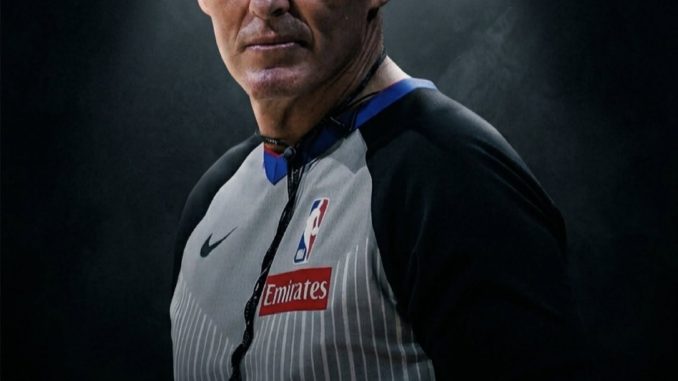
With the NBA Finals reaching a pivotal crossroads, one of the most recognizable names in professional basketball officiating has once again entered the spotlight. Veteran referee Scott Foster has been assigned as crew chief for Game 5 of the championship series, a development that has already sparked intense discussion across the basketball world ahead of one of the most anticipated contests of the season.
The assignment arrives at a critical moment. The New York Knicks hold a commanding 3-1 series lead over the San Antonio Spurs and enter Game 5 with an opportunity to capture the franchise’s first NBA championship in more than five decades. For San Antonio, the contest represents a win-or-go-home scenario, the kind of pressure-packed environment where every possession, every whistle, and every decision will be scrutinized by fans, players, coaches, and analysts alike.
Few officials in NBA history have generated as much attention as Foster. Throughout a career spanning more than two decades, he has officiated hundreds of playoff games and numerous NBA Finals matchups, becoming one of the league’s most experienced referees. His reputation for handling high-pressure contests has often led the league to assign him to some of the most important games on the postseason calendar.
Yet Foster’s presence has frequently become a story in itself.
Around the league, players and fans have long debated the impact of officiating crews on the flow of games. While NBA officials are tasked with enforcing the rules consistently regardless of circumstance, certain referees have developed reputations based on their style of officiating. Foster is often viewed as a referee who allows physical play while maintaining strict control over game management, a combination that has produced both praise and criticism throughout his career.
As news of the assignment circulated, social media immediately erupted with reactions from fans on both sides of the Finals matchup. Some viewed the decision as a routine appointment of one of the league’s most trusted postseason officials. Others saw it as an intriguing storyline given Foster’s extensive history in high-stakes playoff games and the countless narratives that have followed him over the years.
For the Spurs, the focus remains on extending their season. After dropping Game 4 in heartbreaking fashion, San Antonio faces immense pressure entering Game 5. The team has battled throughout the postseason behind the leadership of star guard De’Aaron Fox, whose performances have helped carry the franchise to the brink of championship contention. However, the Spurs now find themselves needing three consecutive victories against a Knicks team that has displayed resilience and composure throughout the Finals.
The challenge becomes even greater when considering the atmosphere awaiting them. San Antonio returns home with its season hanging in the balance, hoping the energy of its crowd can help fuel a comeback. Every possession will carry added significance, and every whistle from the officiating crew will likely be met with immediate reaction from players, coaches, and fans.
On the other side, New York enters the evening with momentum and confidence. The Knicks have consistently found answers throughout the series, overcoming adversity and capitalizing on key opportunities when they mattered most. Their Game 4 victory placed them just one win away from ending one of the longest championship droughts among major American professional sports franchises.
The possibility of a title-clinching victory only amplifies the significance of Game 5. Championship-clinching games often carry a unique intensity, as one team plays with the urgency of survival while the other attempts to seize a historic moment. Under those circumstances, officiating inevitably becomes part of the conversation.
Foster’s assignment reflects the NBA’s confidence in his ability to manage that environment. League officials traditionally select their most experienced referees for the later stages of the Finals, particularly games that may determine a championship. Experience, communication skills, and the ability to maintain control during emotionally charged situations are all factors that influence those decisions.
Throughout his career, Foster has demonstrated an ability to navigate those challenges. He has worked countless playoff elimination games, conference finals contests, and Finals matchups. The sheer volume of his postseason experience places him among the most accomplished officials of his generation.
Nevertheless, experience alone does not shield an official from scrutiny.
Basketball fans have become increasingly analytical regarding officiating trends. Statistics, historical records, and game-by-game outcomes are routinely examined whenever referee assignments are announced. In the age of social media, discussions that once occurred among small groups of fans now spread instantly across the basketball community.
That reality has made Foster one of the most discussed figures in officiating circles. His assignments often generate headlines before the opening tip, something rarely seen for referees in professional sports. While players remain the stars of the game, Foster’s name has become familiar enough that many fans recognize it immediately when playoff crews are announced.
The fascination stems from a combination of longevity, visibility, and the stakes involved in the games he frequently officiates. When a referee consistently appears in pivotal postseason moments, narratives naturally develop. Some are supported by statistics, while others emerge simply from memorable games and controversial calls that remain fresh in fans’ minds.
For players, however, the objective remains unchanged regardless of who is assigned to officiate.
Coaches across the NBA routinely emphasize the importance of controlling what can be controlled. That philosophy becomes even more critical during the Finals, where distractions can quickly become magnified. Teams understand that championship outcomes are ultimately determined by execution, discipline, and performance rather than officiating assignments.
The Spurs will likely approach Game 5 with that mindset. Their focus will be on improving defensive consistency, limiting turnovers, and creating more efficient offensive opportunities. Whether Foster or any other referee is working the game, San Antonio’s path to victory depends on its ability to outperform New York over 48 minutes.
The Knicks share a similar perspective. With a championship within reach, their emphasis will center on maintaining composure and executing their game plan. Experienced teams understand that becoming distracted by officiating can be costly, particularly in a Finals environment where every possession matters.
Still, the reality remains that officiating will be closely monitored throughout the night.
Every playoff series contains moments that spark debate. Whether involving foul calls, no-calls, technical fouls, replay reviews, or interpretations of physical play, officiating decisions can quickly become central talking points. The Finals, with its enormous audience and championship implications, amplifies those discussions significantly.
That dynamic places additional pressure on Foster and his crew.
The assignment demands not only technical accuracy but also the ability to manage emotions, communicate effectively with players and coaches, and maintain consistency throughout the game. Finals contests often feature momentum swings, heightened physicality, and increased emotional intensity. Officials must balance enforcing the rules while allowing the game to flow naturally.
For Foster, those challenges are familiar territory.
His extensive postseason résumé has exposed him to virtually every situation imaginable. He has officiated dramatic comeback victories, overtime thrillers, elimination games, and championship celebrations. That experience is a major reason why the league continues to trust him with some of its most important assignments.
As tipoff approaches, the storyline surrounding Foster serves as another reminder of the immense stakes attached to Game 5. The Knicks stand one victory away from basketball immortality. The Spurs are fighting to keep their championship dreams alive. Millions of viewers will tune in to witness the next chapter of a Finals series that has already delivered memorable moments.
In the end, the hope for everyone involved is straightforward: that the game is decided by the performances of the players on the floor. The NBA’s biggest stage belongs to the athletes chasing a championship, and both teams will be determined to ensure the spotlight remains on their play rather than on officiating controversy.
Still, whenever Scott Foster’s name appears on a Finals assignment sheet, attention inevitably follows. His reputation, experience, and history in high-profile postseason games guarantee that he will be part of the pregame conversation. Whether that discussion continues after the final buzzer will depend largely on how Game 5 unfolds.
For now, one thing is certain: with the championship hanging in the balance and Foster serving as crew chief, another layer of intrigue has been added to an already captivating NBA Finals showdown. As the Knicks seek to complete their title quest and the Spurs battle to extend their season, all eyes will be on the court for what promises to be a dramatic and unforgettable night of basketball.
Be the first to comment