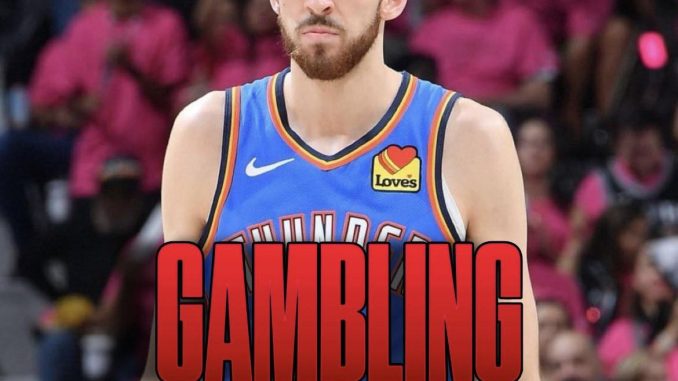
🚨 A wave of conversation has emerged around Oklahoma City Thunder forward Chet Holmgren following reports and social media discussions questioning his recent form, particularly in matchups against the San Antonio Spurs. While no official statement from the league has confirmed any formal review or disciplinary action, the chatter surrounding Holmgren’s performances has intensified, placing the young big man under an unexpected spotlight at a crucial point in the season.
According to circulating reports and commentary from various basketball insiders, attention has shifted toward Holmgren’s recent stretches where his impact appeared inconsistent in high-leverage moments. The concerns, as described in these discussions, revolve around his offensive assertiveness, defensive engagement, and overall presence in games where Oklahoma City has needed him to anchor both ends of the floor.
For a player still early in his NBA journey, the scrutiny reflects both the heightened expectations placed upon him and the growing importance of his role within a Thunder roster that has been steadily climbing in the Western Conference hierarchy. Holmgren, widely regarded as one of the league’s most promising young bigs, has been central to Oklahoma City’s identity when at his best. But in recent matchups—particularly against a physical and disciplined San Antonio Spurs squad—some observers believe his influence has not been as pronounced as expected.
The San Antonio Spurs, led by their emerging core and anchored by their defensive structure, have presented a unique challenge for opposing frontcourt players. Their ability to contest space, switch defensively, and limit interior touches has created problems for multiple teams this season. Against that backdrop, Holmgren’s recent outings have become a focal point for analysts attempting to evaluate how he adapts when his usual rhythm is disrupted.
Within those games, the discourse has centered less on statistical output alone and more on perceived energy levels, shot selection in key possessions, and defensive positioning in late-clock situations. While box score numbers may not always reflect the nuance of these critiques, the broader conversation has leaned heavily into intangible aspects—effort, communication, and defensive presence—areas that are often magnified when expectations are as high as they are for Holmgren.
It is important to note that no formal investigation or disciplinary review has been confirmed by the league office or by the NBA. However, in the modern NBA landscape, where performance is constantly dissected through advanced metrics, broadcast analysis, and social media scrutiny, narratives can escalate quickly even without official validation.
Holmgren’s situation underscores that reality. As a cornerstone piece for the Oklahoma City Thunder, he carries expectations that extend beyond traditional rookie or sophomore benchmarks. His unique combination of length, mobility, shot-blocking ability, and floor spacing has made him a critical component of Oklahoma City’s long-term vision. Yet, with that promise comes the pressure to deliver consistency on a nightly basis—especially in matchups against teams that are stylistically capable of neutralizing his strengths.
Against the San Antonio Spurs, those challenges have been particularly evident. San Antonio’s defensive schemes often force opposing big men into uncomfortable decisions, pulling them away from the rim while also contesting perimeter actions with disciplined rotations. In such environments, players like Holmgren are required not only to execute their roles but to impose themselves physically and mentally in ways that shift momentum.
The recent discourse suggests that in these specific matchups, Holmgren has occasionally struggled to assert that level of dominance consistently across four quarters. Some analysts have pointed to stretches where he appeared less involved in the offensive flow, while others have highlighted moments where his defensive rotations did not produce the same disruptive impact fans have come to expect.
Still, within NBA circles, there is a strong counter-narrative that urges caution before drawing sweeping conclusions. Player development—particularly for big men with Holmgren’s skill set—rarely follows a linear trajectory. The adjustment to nightly scouting, physical interior play, and evolving defensive coverages often produces fluctuations in performance, especially against teams that emphasize structure and discipline like San Antonio.
Coaching perspectives around the league often emphasize that young players experience natural ebbs and flows in energy expenditure and decision-making as they adapt to the pace and physicality of the league. Holmgren, despite his polished skill set, is still navigating that learning curve. For many within the Thunder organization, those fluctuations are viewed less as warning signs and more as part of a broader developmental arc.
Even so, the conversation has gained traction because Holmgren is no ordinary young player. His ceiling has been discussed in franchise-player terms since his entry into the league. His defensive versatility allows Oklahoma City to switch schemes seamlessly, while his offensive spacing opens driving lanes for perimeter creators. When he is fully engaged and operating at peak efficiency, the Thunder’s entire system becomes significantly more dynamic.
That is why any perceived dip in intensity naturally draws attention. In a league where margins are thin and Western Conference standings are tightly contested, every possession carries weight. Teams like Oklahoma City, built around youth and upward momentum, are especially sensitive to stretches where foundational players appear out of sync.
Analysts reviewing recent film have noted that Holmgren’s best stretches continue to showcase his elite shot-blocking timing, his ability to stretch the floor, and his underrated passing out of the high post. However, the criticism tends to focus on consistency—particularly his willingness to demand touches in mismatches and his engagement when plays break down.
Some of the most discussed moments from the Spurs matchups include sequences where Holmgren was seen drifting to the perimeter rather than sealing deeper post position, as well as defensive possessions where opponents were able to draw him into space before attacking the rim. These instances, while not uncommon for young bigs adapting to NBA pace, have been amplified due to the expectations surrounding his role.
In Oklahoma City’s internal evaluation framework, however, there is a strong emphasis on context. The Thunder’s coaching staff has consistently prioritized development, defensive communication, and long-term system cohesion over isolated performance spikes. Holmgren’s integration into that system has generally been viewed positively, particularly given the team’s overall trajectory and competitiveness in the Western Conference.
Around the league, executives and scouts remain largely aligned on Holmgren’s upside. His rare physical profile—combining rim protection with perimeter shooting—continues to make him one of the most unique young talents in basketball. Even amid recent scrutiny, there is little indication within professional circles that long-term confidence in his trajectory has wavered.
Still, the nature of NBA discourse means that perception can shift rapidly based on a small sample of games. A few quiet scoring nights or defensively challenging matchups can quickly evolve into broader narratives about effort or consistency, especially when amplified by fan discussions and media commentary.
For Holmgren, the immediate challenge is less about external narratives and more about response. The league’s best young players often encounter early-career criticism that becomes a defining turning point—either fueling growth or becoming a lingering storyline. How he responds in upcoming matchups, particularly against physical frontcourts, will likely shape how this stretch of discourse is ultimately remembered.
Within the Thunder locker room, the focus remains on stability and execution. Veteran leadership and coaching staff continuity have helped Oklahoma City maintain a steady environment for development, even as external expectations rise. Holmgren, for his part, has previously shown resilience in responding to challenges, often bouncing back with strong defensive performances or efficient offensive outings following quieter stretches.
As the season progresses, the broader evaluation of Holmgren will almost certainly extend beyond a handful of games against San Antonio or any single opponent. The NBA is a long grind, and young players are often judged as much by their adjustments as by their initial performances.
What remains clear is that Holmgren’s presence continues to be a central pillar for the Thunder’s identity. Whether stretching the floor offensively or serving as a defensive anchor, his role is not easily replaced. And while recent conversations have introduced scrutiny into the conversation, they also reflect the reality of his growing importance in the league.
The spotlight, in many ways, is a natural consequence of his rise. For players with his level of potential, every performance becomes part of a larger narrative—one that is constantly being written, revised, and debated across the NBA landscape.
For now, the conversation remains just that: conversation. No formal action has been taken, no official concerns have been publicly confirmed, and Holmgren remains a key figure in Oklahoma City’s present and future ambitions. But as the season continues and matchups grow more intense, all eyes will remain on how he responds the next time he shares the floor with a defense as disciplined and demanding as that of the San Antonio Spurs.
Be the first to comment