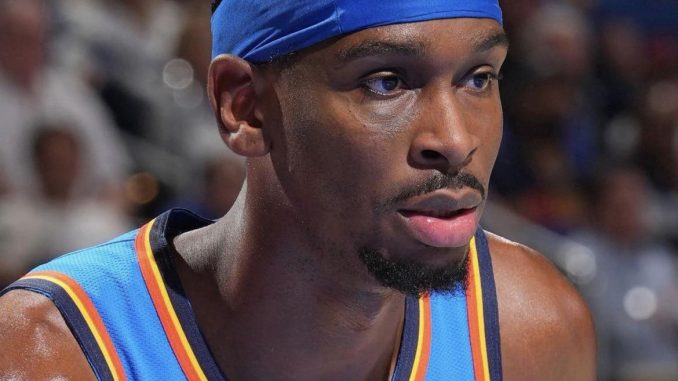
The intensity of the Western Conference playoff battle between the Oklahoma City Thunder and the San Antonio Spurs has reached another level, with reports emerging that Oklahoma City star Shai Gilgeous-Alexander and members of the Thunder organization have formally expressed concerns to the league regarding what they believe has been repeated flopping and excessive physical play throughout the series.
According to reports, the Thunder have asked the NBA to review multiple incidents from the matchup, citing concerns about player safety and the consistency of officiating. Oklahoma City is reportedly seeking stronger enforcement of existing rules governing excessive contact while also requesting a closer examination of plays they believe involve embellishment or attempts to influence officiating decisions.
The development adds another layer of drama to what has already become one of the most physical and emotionally charged playoff series in recent memory. With every possession carrying enormous significance and both teams fighting for a place in the NBA Finals, tensions have steadily risen on the court, creating an atmosphere where every whistle, every collision, and every disputed call becomes a major talking point.
For the Thunder, the concerns reportedly stem from a growing frustration over the style of play that has defined much of the series. Oklahoma City believes that several situations involving hard contact have gone beyond the normal level of playoff physicality. Team officials are said to have highlighted a number of possessions in which they felt players were placed at unnecessary risk due to aggressive challenges, off-ball contact, and borderline plays that were either not called or inconsistently officiated.
At the center of those concerns is Gilgeous-Alexander, the league MVP and the driving force behind Oklahoma City’s postseason run. Throughout the playoffs, the All-Star guard has carried a significant offensive burden while frequently facing intense defensive pressure. Against San Antonio, that pressure has often manifested in physical confrontations as defenders attempt to limit his effectiveness in isolation situations and when attacking the rim.
Gilgeous-Alexander has consistently drawn attention from multiple defenders, and every drive to the basket has become a battleground. The Thunder star has absorbed contact on numerous possessions, often finding himself on the floor after challenging larger defenders in traffic. While playoff basketball has always featured a higher level of physicality, Oklahoma City reportedly believes the line between aggressive defense and excessive contact has occasionally been crossed.
The concerns surrounding flopping are equally significant. According to reports, the Thunder have pointed to multiple sequences where they believe players exaggerated contact in an effort to draw fouls or influence officials. League rules already allow for fines and penalties related to flopping, but enforcement has often been a subject of debate throughout the NBA.
The Thunder reportedly feel that certain actions during the series have disrupted the flow of games and created an uneven playing environment. By requesting reviews of specific incidents, Oklahoma City appears to be seeking greater consistency in how those situations are judged moving forward.
From San Antonio’s perspective, however, the physical nature of the series has been one of the primary reasons for its success. The Spurs have built their identity around toughness, defensive intensity, and relentless effort. Throughout the postseason, they have embraced the challenge of competing against one of the league’s most talented offensive teams, often using physical defense to disrupt rhythm and force difficult shots.
The Spurs have made life difficult for Oklahoma City’s scorers by crowding driving lanes, contesting shots aggressively, and battling for every loose ball. Their approach has been widely praised by observers who view playoff basketball as a setting where teams must be willing to match their opponents’ intensity possession after possession.
Many around the league recognize that postseason basketball traditionally differs from the regular season. Officials often allow more contact, players compete with greater urgency, and games become increasingly physical as championship aspirations hang in the balance. The challenge for referees is determining where to draw the line between acceptable playoff toughness and actions that warrant penalties.
That challenge has been particularly evident throughout this series.
Several games have featured extended discussions between players and officials. Coaches from both sides have voiced opinions about calls and non-calls. Physical confrontations have frequently resulted in lengthy reviews, while fan bases have passionately debated officiating decisions across social media platforms.
The latest reports suggest that Oklahoma City believes league intervention could help establish a clearer standard moving forward. The organization is not reportedly asking for special treatment but rather seeking consistency in how rules are enforced. From the Thunder’s perspective, ensuring that similar plays receive similar rulings is essential to maintaining competitive fairness.
Player safety has also become an increasingly important issue across professional sports, including the NBA. Over the past decade, the league has implemented numerous measures designed to reduce unnecessary risk and protect athletes from dangerous plays. Flagrant foul rules, enhanced replay review procedures, and stricter interpretations of certain forms of contact have all been introduced with safety in mind.
For Oklahoma City, the request for additional review appears to align with those broader league objectives. Teams invest heavily in their players, and organizations naturally want assurance that every possible step is being taken to protect them during high-stakes competition.
The timing of the concerns is notable given the importance of the series. Every game has carried enormous consequences, and momentum has shifted repeatedly between the two teams. In such an environment, even a single officiating decision can alter the course of a game and potentially impact an entire season.
The Thunder entered the postseason as one of the NBA’s premier teams, powered by a dynamic roster built around Gilgeous-Alexander and a talented supporting cast. Their combination of elite scoring, defensive versatility, and youthful energy made them one of the favorites to compete for a championship.
San Antonio, meanwhile, has emerged as one of the league’s most compelling stories. Led by Victor Wembanyama and a rapidly developing core, the Spurs have demonstrated remarkable resilience throughout the playoffs. Their ability to embrace physical competition has become a defining characteristic of their postseason identity.
The clash between those contrasting styles has produced a series filled with memorable moments. Spectacular individual performances have been accompanied by intense defensive battles. Momentum swings have energized crowds and fueled debates among analysts. Every contest has felt like a heavyweight fight, with neither side willing to surrender an inch of ground.
As the spotlight grows brighter, scrutiny of officiating inevitably follows. Players, coaches, executives, and fans all analyze key decisions, searching for explanations when outcomes hinge on razor-thin margins. The NBA routinely receives feedback from teams during the postseason, and requests for clarification or review are not uncommon.
What makes this situation particularly noteworthy is the combination of concerns being raised. The Thunder’s reported emphasis on both flopping and excessive physicality highlights the complexity of officiating modern NBA games. Officials must simultaneously discourage embellishment while ensuring legitimate contact is penalized appropriately. Balancing those objectives becomes even more difficult in playoff environments where emotions run high and every possession is magnified.
League officials will now face the task of evaluating the incidents identified by Oklahoma City. Such reviews are typically conducted behind the scenes and may involve examination of game footage, referee reports, and other relevant information. While the league rarely comments publicly on specific complaints, teams often receive explanations regarding how certain plays were interpreted.
Whether any immediate changes result from the Thunder’s concerns remains to be seen. The NBA has historically emphasized consistency and transparency in officiating while acknowledging the challenges officials face during fast-paced games involving elite athletes.
For Gilgeous-Alexander, the focus will likely remain on leading his team through one of the most demanding stretches of the season. The MVP has consistently demonstrated poise under pressure, and his ability to navigate adversity has been one of the defining characteristics of his rise to superstardom.
Throughout the playoffs, he has repeatedly delivered when Oklahoma City needed him most, producing clutch performances and serving as the emotional leader of a young roster. Even amid growing discussions about officiating, his primary objective remains unchanged: finding a way to guide the Thunder toward a championship.
The Spurs, meanwhile, are unlikely to alter the physical identity that has helped them reach this stage. Their success has been built on effort, toughness, and an unwavering commitment to defensive execution. Any suggestion that they should become less aggressive would run counter to the principles that have defined their postseason run.
As a result, the remainder of the series could become even more fascinating. Officials will undoubtedly be aware of the increased attention surrounding physical play and potential embellishment. Players on both sides know every action is being closely monitored. Coaches will continue searching for advantages while attempting to keep their teams focused on basketball rather than controversy.
Ultimately, the story underscores the razor-thin margins that separate victory from defeat in the NBA playoffs. When championship dreams are at stake, every foul call matters. Every collision matters. Every decision is scrutinized.
The Thunder’s reported concerns reflect the enormous pressure and intensity that accompany postseason basketball. Oklahoma City believes stronger enforcement and greater consistency are necessary to ensure player safety and competitive balance. San Antonio continues to embrace a hard-nosed approach that has become central to its identity.
As the series moves forward, all eyes will be on how the league responds, how officials manage the games, and how two determined teams adapt to the heightened scrutiny. One thing is certain: in a playoff battle already defined by passion, physicality, and drama, the conversation surrounding officiating has now become another pivotal storyline in what is shaping up to be one of the most captivating postseason matchups in recent NBA memory.
Be the first to comment