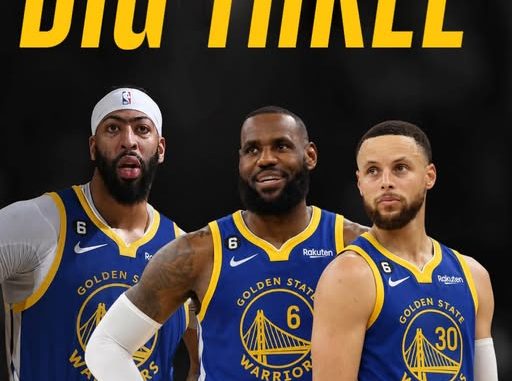
The question continues to hover over the Golden State Warriors as another NBA offseason unfolds: can a veteran core that has already delivered championships, rewritten record books, and defined an era of basketball still make one more legitimate run at a title?
For Dub Nation, it is a debate that sparks both optimism and skepticism. On one side stands the belief that championship pedigree never fades. On the other is the reality that time remains undefeated, especially in a league increasingly dominated by younger, faster, and deeper contenders.
Yet dismissing the Warriors simply because of age would be a mistake.
The franchise built around Stephen Curry, Draymond Green, and fellow veteran stars has spent more than a decade proving doubters wrong. Every time analysts predicted the dynasty’s end, Golden State found a way to remain relevant. Whether it was the emergence of a revolutionary three-point offense, a return to championship form after injuries, or another playoff appearance when expectations were low, the Warriors have repeatedly shown an ability to adapt.
The biggest reason any conversation about contention must begin with Golden State is Curry himself.
Even in the later stages of his career, Curry remains one of the most dangerous offensive players in basketball. Defenses still alter their entire game plans to account for his movement without the ball. His shooting range stretches opponents far beyond traditional defensive schemes, creating opportunities not only for himself but for every player sharing the floor with him.
What makes Curry unique is that his game has aged exceptionally well. Unlike players who rely heavily on athleticism, his greatest weapon is skill. Shooting accuracy, basketball intelligence, conditioning, and movement are traits that can remain elite deep into a player’s career. While he may not possess the same burst he had during his unanimous MVP season, he remains capable of taking over games, series, and potentially playoff runs.
History also suggests that counting out a player of Curry’s caliber is dangerous. The Warriors entered several recent seasons facing questions about whether their championship window had closed, only to remind the basketball world that elite talent can overcome numerous obstacles.
Alongside Curry remains Green, the emotional heartbeat of the dynasty.
Green’s impact has never been fully captured by box scores. His value comes from his defensive versatility, communication, leadership, and ability to orchestrate offense from unconventional positions. Few players in league history have possessed his combination of basketball IQ and defensive instincts.
Although Green’s offensive production is no longer what it once was, his defensive influence remains significant. In postseason basketball, where possessions become more valuable and adjustments determine outcomes, Green continues to be one of the smartest defenders in the NBA.
Championship teams often require veterans capable of recognizing weaknesses before opponents exploit them. Green’s experience provides exactly that. His understanding of playoff basketball remains a major asset for Golden State whenever games slow down and every possession matters.
The challenge for the Warriors is not whether Curry and Green can still perform at a high level. The larger question is whether the supporting cast around them can consistently compete against the NBA’s elite.
Modern championship contenders require depth, versatility, size, and reliable secondary scoring. The league has evolved dramatically since Golden State first began its dynasty. Teams are bigger, more athletic, and more equipped to switch defensively across multiple positions.
The Warriors can no longer overwhelm opponents purely through experience and championship DNA. They need meaningful contributions from younger players and role players capable of handling increased responsibility.
That reality became increasingly apparent during recent seasons. When Curry was unavailable or limited, Golden State often struggled to generate offense consistently. Opposing defenses focused heavily on stopping him, daring other Warriors to create shots and sustain production.
For Golden State to seriously contend again, the burden cannot rest entirely on Curry’s shoulders.
The franchise needs dependable scoring options who can relieve pressure from its superstar guard. Whether through player development, roster additions, or improved health, secondary offensive creation remains one of the most important factors in determining the team’s ceiling.
Health itself represents another critical variable.
Older teams often face greater injury concerns. Recovery times become longer, and maintaining peak performance over an 82-game regular season can be challenging. The Warriors understand this reality better than most organizations.
A healthy veteran core looks dramatically different from one dealing with injuries and limited availability. Championship aspirations often hinge not only on talent but on whether key players can remain available when the playoffs arrive.
The Western Conference also presents enormous obstacles.
Every season seems to introduce another emerging contender. Younger teams continue to gain experience while established powers reload with fresh talent. The path to the NBA Finals is rarely forgiving, and conference competition grows stronger each year.
Golden State must navigate a landscape filled with dynamic young stars, elite defensive teams, and organizations built specifically to challenge championship contenders. Simply reaching the postseason is no longer enough. The Warriors must demonstrate they can defeat multiple elite opponents in consecutive playoff series.
Still, there are reasons for optimism.
Championship experience remains one of the most valuable commodities in professional sports. Few organizations understand playoff pressure better than the Warriors. Few players have faced more high-stakes moments than Curry and Green.
When games become tense, when hostile road environments intensify, and when adjustments must be made on the fly, experience often becomes a significant advantage. Younger teams may possess greater athleticism, but veterans frequently possess a deeper understanding of what it takes to win four playoff rounds.
Golden State’s culture also remains a strength.
For years, the Warriors have maintained one of the league’s most respected organizational environments. Stability, coaching continuity, and a championship mindset have helped sustain success across multiple eras.
That culture cannot be measured statistically, but it often reveals itself during adversity. Teams with strong foundations tend to respond better when facing losing streaks, injuries, or playoff challenges. Golden State has repeatedly demonstrated resilience throughout its championship era.
Another factor working in the Warriors’ favor is the unpredictability of the NBA itself.
Every season begins with clear favorites, yet the eventual champion is rarely determined solely by preseason projections. Injuries, trades, player development, chemistry, and unexpected performances frequently reshape the championship picture.
A team does not necessarily need to be the most talented roster on paper to win a title. It needs the right combination of health, momentum, matchup advantages, and star performances at the right time.
Golden State has benefited from that formula before.
The Warriors understand that the objective is not necessarily to dominate the regular season. Instead, it is to position themselves for a playoff run where experience and elite shot-making can become decisive advantages.
That philosophy becomes particularly important with an aging core. Conserving energy, managing workloads, and prioritizing postseason readiness often matter more than securing the league’s best record.
The psychological element should not be overlooked either.
Opponents still respect the Warriors. Even younger teams that never experienced Golden State’s early championship years understand what the franchise represents. Facing Curry and Green in a playoff series carries a different level of pressure compared to facing less accomplished opponents.
The Warriors have earned that reputation through years of postseason success. Their presence alone commands attention, and their championship history remains a factor whenever discussions about contenders emerge.
Of course, belief and reputation alone cannot win championships.
The Warriors must continue evolving. They need roster balance, reliable depth, defensive consistency, and offensive versatility. They need younger contributors to complement their veterans. Most importantly, they need their stars healthy and performing at a high level when the postseason arrives.
The margin for error is undoubtedly smaller than it was during the peak years of the dynasty. Golden State no longer enters seasons as the overwhelming favorite. Instead, it operates within a more competitive environment where several teams possess realistic championship aspirations.
Yet being outside the top tier of favorites is not the same as being irrelevant.
As long as Curry remains capable of producing superstar performances and Green continues anchoring the defense, the Warriors will retain a chance. It may not be the dominant force that once revolutionized basketball, but it remains a team capable of threatening opponents in a playoff series.
The ultimate answer to whether this veteran trio can deliver another championship depends on perspective.
If the question is whether Golden State should be considered among the league’s primary contenders, the answer remains yes—provided the roster around its stars performs effectively and health cooperates.
If the question is whether another title is guaranteed, the answer is clearly no. The competition is too strong, the conference too demanding, and the physical challenges too significant.
But championships are not won through guarantees. They are won through opportunity, execution, and belief.
For the Warriors, that opportunity still exists.
The dynasty may be older. The road may be tougher. The margin for error may be slimmer than ever before. Yet as long as Curry continues launching impossible shots, Green continues directing traffic on defense, and Golden State maintains the culture that produced four championships, it would be unwise to completely rule them out.
That is what makes the Warriors one of the NBA’s most fascinating teams entering another season. They are no longer the unstoppable juggernaut that once dominated the league, but neither are they merely a nostalgic reminder of past greatness.
Instead, they remain a franchise standing at the intersection of legacy and possibility, attempting to prove that experience, championship pedigree, and elite talent can still compete against the NBA’s next generation.
And until someone definitively closes that championship window, Dub Nation will continue believing that one more title run is still within reach.
Be the first to comment