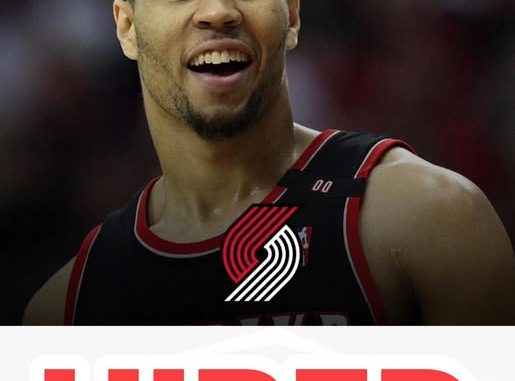
In a stunning organizational move that reconnects the Portland Trail Blazers with one of the most beloved figures in franchise history, the team has officially appointed Brandon Roy as its new head coach, sources confirmed Wednesday.
The decision marks a dramatic and emotionally charged new chapter for a franchise searching for stability, identity, and a return to relevance in the Western Conference. Roy, a three-time NBA All-Star whose playing career was defined by brilliance and heartbreaking injury setbacks, now steps into the spotlight once again—this time not as the centerpiece on the court, but as the leader on the sidelines tasked with guiding the next generation of Blazers basketball.
For Portland, the hiring represents more than just a coaching change. It is a symbolic homecoming, a full-circle moment for a player once considered the unquestioned face of the franchise during the late 2000s. Roy’s rise, peak, and premature decline due to chronic knee injuries remain one of the most poignant “what if” stories in modern NBA history. Now, nearly two decades after his electrifying prime, he returns to the organization with a chance to shape its future from an entirely different vantage point.
According to league sources, the Trail Blazers’ front office was unified in its belief that the franchise needed a cultural reset anchored in identity, accountability, and player development. Roy, who has spent years building coaching experience at the high school and developmental levels, emerged as a strong internal favorite due to his deep understanding of the organization, his leadership presence, and his ability to connect with young players navigating the pressures of the modern NBA.
While Portland conducted due diligence on several external candidates, the momentum behind Roy grew steadily throughout the process. His name carried not only nostalgic weight, but also a growing reputation within basketball circles as a disciplined teacher of the game. Team executives reportedly valued his emphasis on fundamentals, his communication style, and his lived experience as a player who once carried franchise expectations at an elite level.
The Trail Blazers’ decision comes at a pivotal moment for the organization. After several seasons of roster turnover, inconsistent development timelines, and fluctuating competitiveness in the Western Conference, Portland has been searching for a long-term vision. The franchise has cycled through different approaches in recent years—balancing rebuilding phases with attempts to remain competitive—but has yet to find sustained momentum.
Roy’s hiring signals a commitment to continuity and internal culture-building rather than short-term fixes. League observers interpret the move as an effort to stabilize the locker room environment, particularly for a young core that has shown flashes of promise but lacks consistent structure and identity.
One league executive described the hire as “a culture bet more than a tactical one,” emphasizing that Portland is banking on Roy’s leadership presence and credibility with players rather than expecting him to immediately revolutionize scheme or strategy at the NBA level.
Still, those familiar with Roy’s coaching journey argue that his basketball IQ should not be underestimated. Even during his playing days, he was widely praised for his advanced understanding of spacing, tempo control, and in-game decision-making. His ability to read defenses and manipulate mid-range scoring opportunities made him one of the league’s most efficient and versatile guards during his peak seasons.
In Portland, those traits are expected to translate into a coaching philosophy rooted in balance, discipline, and offensive structure. Early indications suggest Roy intends to prioritize player accountability on both ends of the floor, with a strong emphasis on shot selection, defensive rotations, and situational awareness—areas that have repeatedly challenged the Blazers in recent seasons.
Perhaps the most compelling element of Roy’s return is the emotional resonance it carries for the city of Portland. Few athletes in franchise history have captured the imagination of fans quite like him. During his prime, Roy was not just a star—he was a symbol of hope for a franchise navigating a post-Jail Blazers identity shift. His poise in clutch moments, calm leadership style, and smooth offensive game earned him widespread admiration across the league.
Even after his playing career was cut short by degenerative knee issues, Roy’s legacy in Portland remained intact. He transitioned into coaching with a quiet determination, often staying close to the game while avoiding the spotlight that once followed him nightly during his playing years. That humility, combined with his deep ties to the organization, ultimately made him an appealing candidate for a franchise looking to reconnect with its roots.
Players around the league have already begun reacting to the news, with many expressing intrigue at the idea of Roy stepping into a head coaching role. Several former teammates and contemporaries have long believed he possessed the leadership qualities necessary to succeed in coaching, even if his playing career ended earlier than expected.
Within the Blazers locker room, the reaction is expected to be similarly strong. Young players who grew up watching Roy’s highlight reels now find themselves under his guidance. That dynamic, team insiders believe, could prove powerful in establishing immediate respect and buy-in. In an era where player empowerment and roster fluidity often challenge coaching authority, Roy’s credibility as a former elite player may be one of his most valuable assets.
Still, the transition will not be without challenges. Roy inherits a Western Conference landscape that remains brutally competitive, with established contenders and emerging superteams setting a high bar for success. The demands of an 82-game season, combined with the expectations of a passionate fan base, will test his adaptability and resilience in real time.
Analysts also point out that first-time head coaches often face steep learning curves when adjusting to NBA-level game management, rotation decisions, and late-game strategy. For Roy, the challenge will be balancing his instincts as a former player with the analytical demands of modern coaching, where data-driven decision-making and real-time adjustments are increasingly critical.
However, those close to the organization insist that Portland is not expecting overnight transformation. Instead, the focus is on establishing a clear identity, developing young talent, and building a sustainable system that can evolve over time. In that sense, Roy’s appointment is as much about patience as it is about ambition.
The Trail Blazers’ front office is expected to provide him with a strong support staff, including experienced assistants with prior NBA head coaching experience. That infrastructure will be essential in helping Roy navigate the complexities of roster management, defensive scheming, and in-game adjustments during high-pressure situations.
From a broader league perspective, the move adds another intriguing storyline to the NBA coaching landscape. Former players transitioning into head coaching roles is not uncommon, but few carry the kind of emotional weight and franchise history that Roy brings to Portland. His success or failure will likely be closely watched, not just by Blazers fans, but by the entire basketball community.
If successful, Roy could redefine what it means for franchise legends to return in leadership roles. If the transition proves difficult, it may serve as a reminder of the challenges inherent in coaching at the highest level, regardless of playing pedigree.
For now, however, optimism appears to be the dominant emotion in Portland. The franchise is embracing a familiar face with a deeply rooted connection to its most hopeful era. Fans who once watched Roy orchestrate game-winning possessions at the Rose Garden now have a new reason to believe that his influence can once again reshape the team’s direction.
As the Trail Blazers prepare for the next phase of their evolution, one thing is certain: Brandon Roy’s return is not just a hiring—it is a statement. A statement about identity, about trust in legacy, and about the belief that sometimes the future of a franchise is best guided by someone who has already lived its past.
Be the first to comment