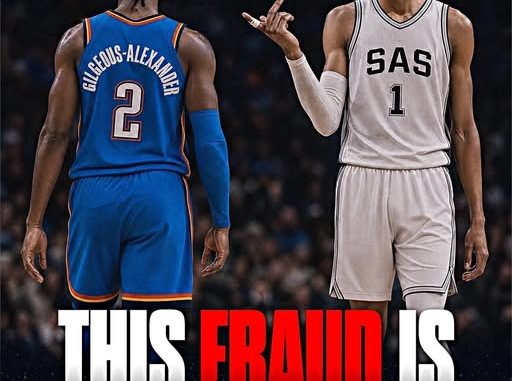
The numbers on the stat sheet may tell one story, but inside every arena, every locker room, and every basketball conversation happening across the league, there are moments when the box score simply becomes irrelevant. Those are the nights when impact outweighs statistics, when leadership cannot be measured by points alone, and when one player leaves such a massive imprint on a game that fans, teammates, coaches, and even opponents walk away saying the exact same thing: forget the box score — everyone knows who the real MVP is.
That sentiment has become one of the defining themes of today’s NBA culture, where greatness is no longer judged solely by how many points are scored or how many triple-doubles are collected. In the modern era of basketball, where advanced analytics dominate debates and social media instantly dissects every possession, there remains one undeniable truth that no spreadsheet can fully capture: true value reveals itself in the biggest moments.
Throughout this postseason, the phrase “real MVP” has echoed louder than ever. Whether it has been a superstar taking over late in games, a veteran calming a young locker room during chaos, or a franchise cornerstone sacrificing personal numbers for team success, fans across the basketball world have repeatedly gravitated toward the players whose presence changes everything the moment they step onto the floor.
The NBA has always been a league built on stars, but legends are created through moments that transcend statistics. It is why names like Michael Jordan, LeBron James, and Kobe Bryant remain immortal in basketball conversations long after their greatest box scores have faded into history. Fans remember the feeling those players created more than the exact stat lines they posted. They remember control, dominance, fearlessness, and the ability to bend the pressure of an entire arena to their will.
That same energy is now being discussed around today’s generation of stars. In packed arenas throughout the playoffs, supporters have watched players completely alter the emotional direction of games without necessarily producing eye-popping numbers. One defensive stop, one leadership huddle, one momentum-shifting possession, or one fearless fourth-quarter sequence has often meant more than a 40-point performance in defeat.
The modern NBA audience has become smarter in recognizing that reality. Fans understand that the game is more than points per game. They see how a player commands double teams that create opportunities for teammates. They recognize the importance of communication on defense, the willingness to sacrifice touches, and the ability to remain composed while everyone else panics. Those qualities rarely appear in headlines the next morning, yet they frequently determine who advances and who goes home.
This postseason especially has highlighted how valuable emotional leadership can be. Young teams entering hostile playoff environments often discover quickly that talent alone is not enough. The brightest stars are the players who stabilize chaos when momentum swings violently. The true MVPs are often the ones who make everyone around them better, even if they are not leading the scoring column every single night.
Across sports media, analysts have increasingly debated whether the traditional definition of “Most Valuable Player” even fully captures what basketball greatness really means. Statistically dominant seasons certainly matter, but playoff basketball repeatedly reminds the world that value is sometimes invisible to numbers. It exists in trust, composure, resilience, and the ability to elevate teammates under pressure.
That is why certain players develop reputations that far exceed analytics. Opponents speak about them differently. Coaches game-plan around them differently. Fans feel their influence even during quiet scoring nights. Their impact becomes impossible to ignore because basketball, at its core, has always been about control of moments rather than accumulation of statistics.
One reason the phrase “forget the box score” resonates so strongly is because basketball history is filled with iconic examples of games where numbers alone failed to explain the full story. There have been Finals performances where a player’s leadership changed an entire series despite modest shooting percentages. There have been defensive masterclasses that never received the same attention as explosive offensive nights. And there have been superstars who willingly sacrificed individual glory to create championship chemistry.
That balance between sacrifice and dominance defines the greatest winners in league history. Every championship team eventually reaches a point where ego must disappear and leadership must emerge. The real MVPs are often the ones willing to do whatever the game demands, even if it hurts their personal statistics.
Fans today are witnessing that same dynamic unfold repeatedly throughout the playoffs. Several stars have embraced uncomfortable roles for the sake of winning. Some have become defensive anchors instead of primary scorers. Others have prioritized facilitating offense rather than chasing points. In an era where personal branding and individual accolades dominate conversations, those sacrifices stand out even more.
Social media has amplified the emotional side of sports discussions as well. After nearly every major playoff game, timelines explode with reactions that rarely focus exclusively on the final stat sheet. Instead, fans discuss effort, energy, poise, and mentality. They praise players who refuse to quit, who respond after adversity, and who deliver when pressure reaches its peak.
That emotional connection between fans and players is what truly defines MVP-level greatness. Basketball supporters can sense authenticity immediately. They know when a superstar is competing purely for numbers and when someone is genuinely carrying the weight of a franchise. The latter creates loyalty that lasts forever.
The intensity of postseason basketball also magnifies every detail. Weaknesses become exposed. Depth gets tested. Rotations shrink. Every possession feels heavier. Under those circumstances, the players capable of controlling the emotional rhythm of games become priceless. They may not always lead SportsCenter highlights, but their fingerprints remain all over victories.
Coaches understand this reality better than anyone. Inside locker rooms, value is often discussed very differently than it is on television debates. Coaches obsess over communication, rotations, discipline, and trust. They recognize the players who consistently make winning plays regardless of whether cameras notice them. Many championship coaches throughout NBA history have repeatedly emphasized that some of the most valuable contributions never appear in traditional statistics.
This is especially true defensively. Great defenders can completely destroy offensive game plans without recording massive steal or block totals. Their positioning, anticipation, and communication change everything. They force hesitation. They eliminate easy scoring opportunities. They wear down opposing stars mentally over the course of a series.
The same applies to leadership. Veteran stars who calm younger teammates during hostile playoff moments often provide immeasurable value. Their confidence becomes contagious. Their composure stabilizes the entire team. Those qualities cannot be quantified, yet championship teams almost always possess them.
The conversation surrounding “real MVPs” also reflects a growing appreciation for winning basketball over individual entertainment. Fans still love explosive scoring performances, but there is increasing respect for players who prioritize team success above personal narratives. The league’s culture is evolving toward recognizing complete basketball impact rather than purely offensive production.
That shift has created fascinating discussions about legacy as well. Championships remain the ultimate measuring stick for superstars because winning requires far more than scoring ability. It demands adaptability, sacrifice, endurance, and emotional resilience. The players who consistently deliver those qualities become remembered differently.
Throughout NBA history, the most respected stars have always been the ones teammates trusted completely in critical moments. Trust is the ultimate basketball currency. It is earned through consistency, accountability, and the willingness to embrace pressure rather than avoid it. Real MVPs thrive when expectations become overwhelming.
The pressure surrounding today’s stars is arguably greater than ever before. Every game is dissected instantly. Every mistake trends online. Every performance becomes part of endless debates. Despite that environment, the league’s biggest names continue carrying enormous expectations nightly. The mental toughness required to handle that scrutiny deserves recognition itself.
That is another reason why fans increasingly appreciate intangible greatness. They understand the emotional burden franchise players carry. Superstars are expected to lead, inspire, produce, and respond perfectly under relentless attention. Those who consistently rise above that pressure separate themselves from ordinary stars.
The beauty of basketball is that greatness ultimately reveals itself naturally. Fans may argue endlessly about awards, rankings, and statistics, but deep down, everyone usually recognizes who truly controls games. The eye test still matters. Presence still matters. Leadership still matters.
Inside playoff arenas, you can feel it immediately when a real MVP is operating. Crowd energy changes. Opponents tense up. Teammates gain confidence. Every possession suddenly feels tilted in one direction. That influence cannot be fully explained through data alone because basketball remains deeply emotional and psychological.
The league’s current generation continues producing unforgettable examples of that phenomenon. Young stars are learning how difficult it is to win consistently at the highest level, while veteran legends continue reminding the world why experience matters so much in championship basketball. Every postseason creates new heroes, but the qualities defining those heroes rarely change.
Effort. Poise. Leadership. Fearlessness. Sacrifice.
Those traits have always separated true MVPs from merely talented players.
As playoff intensity rises and championship dreams narrow, the spotlight inevitably grows harsher. Every possession carries consequences. Every missed shot becomes magnified. In those moments, the real MVPs reveal themselves not through perfect stat lines but through their refusal to disappear under pressure.
Sometimes it is a superstar diving for a loose ball in the fourth quarter. Sometimes it is a veteran defending the opposing team’s best scorer despite exhaustion. Sometimes it is a franchise cornerstone accepting criticism publicly to protect younger teammates. Those moments define leadership in ways numbers never could.
The greatest compliment in basketball may no longer be simply calling someone the MVP. Instead, it may be hearing fans, teammates, analysts, and opponents all arrive at the same conclusion after watching a game unfold:
Forget the box score.
Everyone already knows who the real MVP is.
Be the first to comment