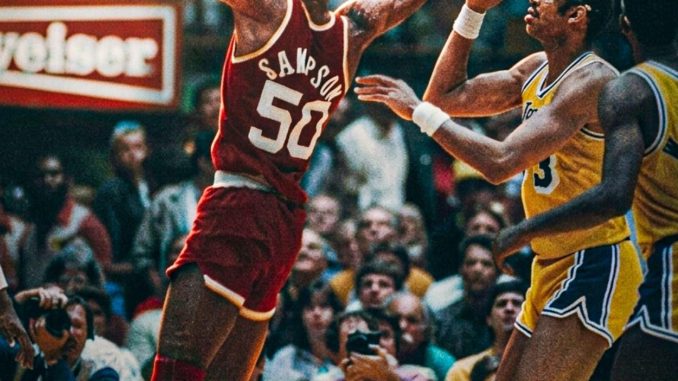
Forty years ago, one of the most unforgettable moments in NBA playoff history unfolded inside the roaring atmosphere of the Forum in Inglewood, California. With the mighty Showtime Lakers appearing destined for yet another trip to the NBA Finals, the unthinkable happened. In the closing seconds of Game 5 of the 1986 Western Conference Finals, Ralph Sampson delivered a miracle that stunned basketball fans across the world, silenced one of the league’s greatest dynasties, and forever changed the trajectory of the Houston Rockets franchise.
It was May 21, 1986, and the defending champion Los Angeles Lakers were expected to continue their reign atop the Western Conference. Led by the electrifying brilliance of Magic Johnson, the scoring dominance of Kareem Abdul-Jabbar, and the fast-paced Showtime identity that had defined an era, Los Angeles had become basketball royalty throughout the 1980s. The Lakers had reached the NBA Finals in four of the previous six seasons and entered the series heavily favored against a young Houston squad built around the towering “Twin Towers” pairing of Sampson and Hakeem Olajuwon.
But sports history has always had room for chaos, and on that night, chaos arrived in the form of a twisting, off-balance, last-second shot that remains one of the most iconic buzzer-beaters ever recorded.
The Rockets entered Game 5 holding a surprising 3-1 series lead after pushing the Lakers to the brink with relentless size, physicality, and defensive pressure. Houston’s rise had been sudden and dramatic. After drafting Olajuwon with the first overall pick in 1984 to pair with Sampson, the franchise suddenly possessed two mobile seven-footers unlike anything the NBA had ever seen. Sampson, a former college superstar at Virginia and the No. 1 overall pick in 1983, had already become one of the league’s most unique talents. Standing 7-foot-4 with guard-like agility, soft shooting touch, and remarkable coordination, he represented a new kind of big man before the modern NBA truly understood what that could mean.
Still, few believed Houston was ready to topple Showtime.
The Lakers had won 62 regular-season games and still carried the aura of invincibility whenever the postseason arrived. They had already eliminated the Spurs and Mavericks on their way to the conference finals and expected experience to ultimately overwhelm Houston’s youth. Yet from the opening tip of the series, the Rockets refused to back down. Olajuwon dominated inside with breathtaking footwork and rim protection, while Sampson stretched the floor and attacked mismatches in ways traditional centers rarely could during that era.
Game 5 became a heavyweight battle worthy of the moment. The Forum crowd anticipated a Lakers victory that would send the series back to Houston for Game 6. Los Angeles fought desperately to preserve its championship hopes, and the game carried the emotional tension of a dynasty trying to survive.
Magic orchestrated the offense with his usual flair, pushing the pace and finding teammates in transition. Abdul-Jabbar, even at age 39, remained a devastating force with the unstoppable skyhook that had tormented defenses for nearly two decades. James Worthy attacked the rim with speed and aggression, while Byron Scott provided perimeter scoring.
Houston answered every challenge.
Olajuwon battled Abdul-Jabbar possession after possession in a symbolic clash between generations. Sampson used his versatility to create matchup nightmares, floating around the court with the movement of a wing player trapped inside a center’s body. The Rockets played with composure beyond their years, refusing to crumble despite the hostile road environment and the championship pedigree standing across from them.
As the fourth quarter unfolded, every possession felt monumental. The Lakers clawed back repeatedly, feeding off the energy of the home crowd and the desperation of a team facing elimination. Houston, meanwhile, continued to believe.
The final moments became legendary.
With the score tied at 112 and only seconds remaining, Houston had one final opportunity to shock the basketball world. The Rockets inbounded the ball with just one second left on the clock. In a situation that appeared almost impossible, the play broke down into pure instinct and improvisation.
Sampson caught the inbounds pass near the baseline with his back partially turned to the basket. Surrounded by defenders and fading awkwardly as time expired, he launched a high-arcing turnaround shot that seemed to hang in the air forever. Then it dropped cleanly through the net as the buzzer sounded.
Pandemonium erupted.
The Rockets stormed the court in disbelief while the Forum crowd stood frozen in shock. Sampson sprinted wildly in celebration as teammates mobbed him near center court. Lakers players stared helplessly at the scoreboard, knowing their dynasty had suffered one of its most painful defeats.
It was more than just a game-winner. It was the shot that ended Showtime’s hold on the Western Conference, at least temporarily. Houston’s 114-112 victory clinched the series 4-1 and sent the Rockets to the NBA Finals for only the second time in franchise history.
For the Lakers, the loss was devastating because it interrupted what many expected to be another championship run. Los Angeles had become synonymous with excellence during the 1980s, reaching Finals after Finals while defining the league’s glamour and entertainment value. The 1986 defeat felt unthinkable because dynasties rarely appear vulnerable until suddenly they are.
Sampson’s shot represented that sudden vulnerability.
In many ways, the moment symbolized a changing of the guard. Abdul-Jabbar was nearing the end of his legendary career. Younger, more athletic teams were beginning to emerge across the league. Houston’s Twin Towers looked capable of controlling the NBA’s future with their combination of size, mobility, and defensive dominance.
For Sampson personally, the shot became the defining image of his career.
Before injuries began to derail his potential, Sampson looked destined to become one of basketball’s all-time greats. He had already won Rookie of the Year honors and earned multiple All-Star selections in his first seasons. His unique skill set made him nearly impossible to defend during his peak years. The Game 5 buzzer-beater elevated him into basketball immortality, ensuring his name would forever be attached to one of the sport’s greatest playoff moments.
The image remains iconic even decades later: Sampson leaning backward near the baseline, defenders closing in, the ball floating softly toward the rim, and the eruption that followed when it fell through.
Houston’s celebration carried enormous significance for the franchise and the city. The Rockets had spent years trying to establish themselves as legitimate contenders in a conference dominated by the Lakers. Their breakthrough victory over Los Angeles announced that the balance of power might finally be shifting.
Olajuwon’s brilliance throughout the series also foreshadowed the greatness that would later define his Hall of Fame career. Although Sampson hit the legendary shot, Olajuwon consistently controlled games with his scoring, rebounding, and shot-blocking. Together, the Twin Towers overwhelmed the Lakers physically and mentally.
The Rockets eventually advanced to face the Boston Celtics in the 1986 NBA Finals, setting up a classic showdown between Houston’s emerging young stars and one of the greatest teams ever assembled. Led by Larry Bird, Boston ultimately defeated Houston in six games, but the Rockets’ playoff run remained unforgettable because of the path they took to get there.
Eliminating Showtime transformed the 1986 Rockets into legends.
For Lakers fans, the memory still stings because it represented a missed opportunity during one of the franchise’s golden eras. Los Angeles rebounded to win championships in 1987 and 1988, but Sampson’s miracle shot remains one of the few moments during the decade when the dynasty truly looked vulnerable.
The play itself has been replayed endlessly through basketball history. Every angle captures a different layer of drama: the impossible timing, the difficult body control, the stunned expressions from Lakers players, and the eruption from Houston’s bench. Even modern fans who never witnessed the game live immediately recognize the historical importance of the moment once they see it.
What makes the buzzer-beater especially remarkable is the degree of difficulty. Sampson did not receive the ball in ideal shooting position. He had almost no time to gather himself, let alone create a clean look against elite defenders. The shot required touch, instinct, balance, and a level of composure that few athletes could summon under such pressure.
Yet somehow, in the biggest moment of his career, Sampson delivered perfection.
The 1986 Western Conference Finals also helped cement the NBA’s rise in popularity during the 1980s. The drama, star power, and emotional intensity showcased everything that made the league compelling during that era. Showtime basketball had already captivated audiences with flair and excitement, but Houston’s upset added another ingredient to the NBA’s growing appeal: unpredictability.
Even dynasties could fall.
Forty years later, the moment still resonates because sports fans are drawn to the impossible becoming reality. The Lakers looked untouchable. Sampson’s shot changed everything in an instant. One bounce of a basketball altered the direction of an entire postseason and created a permanent place in NBA lore.
Today, discussions about the greatest playoff buzzer-beaters inevitably include Sampson’s miracle at the Forum. It stands alongside legendary postseason daggers because of the stakes involved, the magnitude of the upset, and the unforgettable visual of a dynasty collapsing in real time.
The shot also remains a reminder of how quickly narratives can change in sports. Before the series, the Rockets were viewed largely as promising upstarts. After Sampson’s buzzer-beater, they became giant-slayers who had dethroned basketball royalty.
For Houston fans, the memory continues to symbolize belief and resilience. The Rockets were not supposed to win that series. They were not supposed to walk into the Forum and eliminate Magic, Kareem, and Showtime. Yet through toughness, talent, and one miraculous final shot, they accomplished exactly that.
The enduring beauty of the moment lies in its spontaneity. There was no carefully crafted cinematic script. There was only one second left, chaos unfolding near the baseline, and a towering center throwing up a desperate shot that somehow found the bottom of the net.
That is why, four decades later, Ralph Sampson’s miracle still echoes through NBA history.
It was the night a young Rockets team shocked the basketball world. The night Showtime was silenced. The night a dynasty fell to one impossible buzzer-beater. And the night Ralph Sampson transformed from star player into playoff legend forever.
Be the first to comment