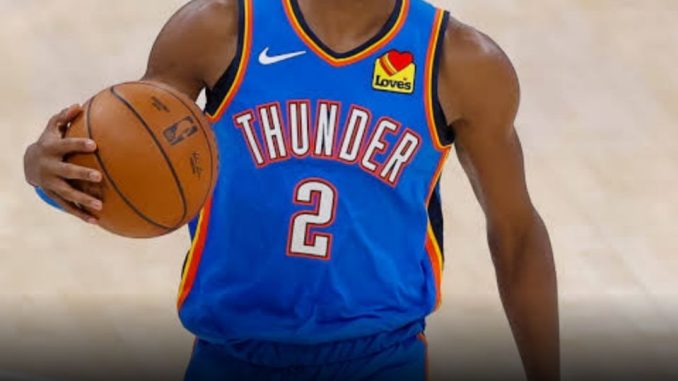
The roar inside Paycom Center on Wednesday night sounded different from two nights earlier. The tension, frustration, and lingering disappointment that followed the Oklahoma City Thunder’s heartbreaking Game 1 loss to the San Antonio Spurs had transformed into fury, focus, and belief. Behind another dazzling performance from league MVP finalist Shai Gilgeous-Alexander, the Thunder answered every question surrounding their championship toughness with a commanding 122-113 victory over the Spurs in Game 2 of the Western Conference Finals, knotting the series at 1-1 and reestablishing themselves as a legitimate threat to reach the NBA Finals.
After being stunned in double overtime during Game 1 by the towering brilliance of Victor Wembanyama and the resilient Spurs, Oklahoma City entered Game 2 carrying enormous pressure. Another loss at home would have sent the young Thunder to San Antonio facing a dangerous 0-2 deficit against one of the league’s most confident and disciplined teams. Instead, Oklahoma City responded with the type of poise and aggression that championship-caliber teams are built upon.
Gilgeous-Alexander once again proved why he has become one of basketball’s most unstoppable offensive forces. The Thunder superstar controlled the pace from the opening tip, slicing through San Antonio’s defense with surgical precision while punishing every defensive mismatch the Spurs attempted to throw his way. Whether it was his silky mid-range jumper, his ability to draw contact in the paint, or his increasingly dangerous playmaking, Gilgeous-Alexander dictated every major stretch of the game.
What separated Oklahoma City from its Game 1 collapse was its ability to sustain pressure on both ends of the floor. The Thunder defense swarmed Wembanyama early, denying him easy catches and forcing San Antonio’s supporting cast to make plays under constant pressure. While the Spurs phenom still produced moments of brilliance, Oklahoma City never allowed him to fully take control the way he had in the series opener.
The Thunder also received major contributions from their young core beyond Gilgeous-Alexander. Jalen Williams played with tremendous confidence, attacking the rim aggressively and knocking down timely perimeter shots whenever San Antonio threatened to regain momentum. Chet Holmgren provided crucial rim protection and floor spacing, giving Oklahoma City balance on both sides of the court while matching the Spurs’ size and length.
For much of the regular season, Oklahoma City’s youth was viewed as both a strength and a potential weakness. The Thunder possessed the athleticism, depth, and talent to overwhelm opponents, but questions remained about whether their inexperience could survive the emotional swings of deep playoff basketball. Wednesday night provided one of the clearest answers yet. After suffering a crushing Game 1 defeat, the Thunder did not panic. They adjusted, responded, and delivered arguably their most mature performance of the postseason.
The atmosphere inside the arena reflected the urgency of the moment from the beginning. Thunder fans, desperate to avoid falling into a deeper series hole, brought playoff intensity long before tipoff. Every defensive stop generated thunderous cheers, every transition basket electrified the building, and every Gilgeous-Alexander isolation possession seemed to lift the energy level another notch higher.
Oklahoma City’s pace immediately became a problem for San Antonio. The Thunder pushed the ball relentlessly after misses, refusing to allow the Spurs to settle into their half-court defense. Gilgeous-Alexander orchestrated the attack masterfully, finding shooters in rhythm while also exploiting gaps in transition. The Spurs, who had looked composed and confident throughout Game 1, suddenly found themselves scrambling to keep up with Oklahoma City’s speed.
Still, San Antonio showed exactly why this series is shaping up to be a potential classic. Even while trailing for much of the night, the Spurs never completely faded. Wembanyama remained a constant threat around the basket, using his extraordinary length to impact shots on both ends. Veteran leadership and smart ball movement allowed the Spurs to repeatedly trim the deficit whenever the Thunder appeared ready to pull away for good.
One of the defining stretches came midway through the third quarter. After Oklahoma City built a double-digit lead, San Antonio answered with a quick scoring burst that silenced the crowd and briefly shifted momentum back toward the visitors. In Game 1, the Thunder struggled to respond during similar moments. This time, however, Gilgeous-Alexander calmly took over. He attacked the paint on consecutive possessions, earned trips to the free-throw line, and then buried a difficult jumper over tight coverage to stabilize Oklahoma City’s advantage.
That sequence highlighted the evolution of Gilgeous-Alexander from rising star to franchise leader. Throughout the playoffs, he has consistently embraced the biggest moments without forcing the action. Against San Antonio’s disciplined defense, he balanced patience with aggression perfectly, allowing the game to come to him while still imposing his will whenever Oklahoma City needed a momentum shift.
The Thunder’s improved defensive communication also played a major role in the victory. Game 1 exposed breakdowns in Oklahoma City’s rotations, especially during late-game possessions where San Antonio generated clean looks from the perimeter. In Game 2, the Thunder tightened those gaps significantly. Rotations arrived earlier, closeouts were sharper, and help defenders consistently disrupted driving lanes.
Holmgren’s presence around the rim became especially important. Though Wembanyama still produced highlight plays, Holmgren’s length and timing prevented San Antonio from dominating the paint the way they had previously. The matchup between the two young giants has quickly become one of the most fascinating individual battles in modern basketball. Both players possess guard-like skills combined with extraordinary size, creating a unique chess match every time they share the floor.
The game also showcased how deep and versatile Oklahoma City’s roster has become. Bench contributions helped sustain energy levels throughout the night, and the Thunder’s collective athleticism wore down San Antonio over long stretches. Oklahoma City consistently won loose balls, forced turnovers, and generated second-chance opportunities that kept pressure firmly on the Spurs.
For San Antonio, the loss served as a reminder that the margin for error against Oklahoma City remains extremely thin. While the Spurs already accomplished their primary goal of stealing home-court advantage with the Game 1 win, Game 2 revealed areas that require improvement before the series shifts to Texas. The Spurs struggled at times to contain dribble penetration, particularly when Gilgeous-Alexander attacked downhill with space. Oklahoma City’s spacing also created difficult defensive decisions for San Antonio, pulling defenders away from the paint and opening driving lanes throughout the contest.
Even so, the Spurs leave Oklahoma City with confidence intact. Wembanyama continues to look every bit like a future global superstar, and San Antonio’s system under pressure has remained remarkably steady throughout the postseason. The series now becomes a best-of-five matchup with home court shifting to San Antonio, where the Spurs have thrived all season long.
What makes this Western Conference Finals particularly compelling is the contrast in styles and timelines. Oklahoma City represents the explosive rise of a young contender built around dynamic guard play, perimeter versatility, and relentless pace. San Antonio, meanwhile, has rapidly accelerated its rebuild behind Wembanyama’s generational talent, combining youthful brilliance with disciplined execution and organizational stability.
The series also symbolizes a potential changing of the guard within the Western Conference. For years, franchises led by established superstars such as LeBron James, Stephen Curry, and Nikola Jokić dominated the conference landscape. Now, a new generation led by Gilgeous-Alexander and Wembanyama appears ready to take center stage.
Wednesday’s victory may ultimately be remembered as a defining moment in Oklahoma City’s playoff evolution. Young teams often face a pivotal crossroads during deep postseason runs — a moment where adversity either fractures confidence or strengthens belief. After the emotional devastation of losing Game 1 in double overtime, the Thunder could have allowed doubt to creep into the locker room. Instead, they delivered a statement performance against one of the hottest teams in basketball.
Head coach Mark Daigneault deserves considerable credit for the adjustments that fueled Oklahoma City’s response. The Thunder played with better balance offensively and far more discipline defensively. Their ball movement created cleaner looks from beyond the arc, while their defensive schemes forced San Antonio into more contested shots throughout the night.
The intensity level is only expected to rise as the series heads to San Antonio for Game 3. The Spurs’ home crowd has become one of the league’s most energized playoff environments, especially with Wembanyama emerging as the face of the franchise. Oklahoma City will now face the challenge of maintaining its composure on the road while attempting to reclaim home-court advantage.
For Gilgeous-Alexander, the upcoming games represent another opportunity to cement his growing reputation as one of basketball’s elite postseason performers. Throughout these playoffs, he has repeatedly demonstrated an ability to control games against elite competition without sacrificing efficiency or composure. His leadership, particularly for such a young roster, continues to elevate Oklahoma City’s championship aspirations.
At the same time, Wembanyama’s brilliance ensures San Antonio remains every bit as dangerous as the team that stole Game 1. Even in defeat, the Spurs showcased stretches of elite basketball, and their ability to make adjustments from game to game has been a defining trait throughout the postseason. The battle between Wembanyama and Holmgren alone provides enough intrigue to captivate the basketball world, but the deeper storyline centers around two rapidly ascending franchises fighting for control of the West’s future.
The NBA has long thrived on rivalries built through repeated playoff collisions, and this matchup already carries the feel of something that could define the next decade of Western Conference basketball. Gilgeous-Alexander versus Wembanyama. Holmgren versus San Antonio’s frontcourt. Two explosive young rosters learning how to navigate championship pressure in real time.
If Game 1 delivered drama, Game 2 delivered a response. Oklahoma City showed resilience, maturity, and star power under pressure. The Thunder proved they would not fold after heartbreak, and now the Western Conference Finals suddenly feels completely reset.
With the series tied at one game apiece, the stakes heading into San Antonio could not be higher. Momentum remains fragile, adjustments will become even more critical, and every possession moving forward will carry enormous weight. But after Wednesday night’s emphatic performance, one thing became unmistakably clear: the Thunder are far from intimidated by the moment, and with Gilgeous-Alexander leading the charge, Oklahoma City fully believes its championship window has already arrived.
Be the first to comment