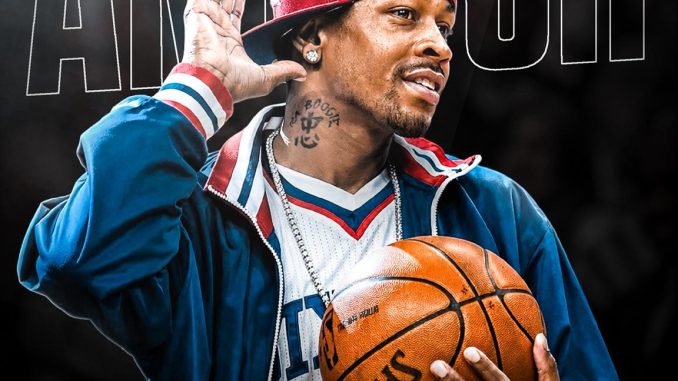
At 55 years old, Allen Iverson remains one of basketball’s most magnetic figures, a cultural icon whose impact on the NBA stretched far beyond points, crossovers, and highlight reels. Long after his final game in the league, Iverson continues to cash in on the legacy he built during one of the most electrifying careers professional basketball has ever witnessed. The former MVP, who once revolutionized the league’s image with his unapologetic authenticity, is still receiving approximately $800,000 annually from a groundbreaking lifetime endorsement agreement with Reebok — a deal reportedly valued at $32 million and widely considered one of the most legendary sneaker contracts in sports history.
For many fans who watched Iverson dominate defenders in the late 1990s and early 2000s, the revelation is both astonishing and fitting. Few athletes embodied a brand as naturally as Iverson did with Reebok. While other stars carefully curated clean-cut corporate images, Iverson brought raw emotion, street culture, and fearless individuality into the mainstream. Reebok recognized that authenticity early, betting on a young guard from Georgetown University before he ever stepped onto an NBA floor. Decades later, that investment continues to pay dividends for both sides.
Iverson entered the league in 1996 after being selected first overall by the Philadelphia 76ers, immediately becoming one of the most captivating players basketball had ever seen. Standing barely six feet tall and weighing far less than most defenders tasked with stopping him, Iverson played with a fearlessness that bordered on reckless. He attacked giants in the paint, absorbed punishing contact night after night, and still emerged as one of the league’s most unstoppable scorers. Fans admired his toughness, but they connected even more deeply with the edge he carried everywhere — from his tattoos and cornrows to the swagger that made him feel larger than life.
That cultural influence became the foundation of Iverson’s partnership with Reebok. At a time when the sneaker industry was dominated by giants like Nike and emerging stars attached to polished marketing campaigns, Reebok needed a face capable of breaking through the noise. Iverson became exactly that. His signature shoe line, beginning with “The Question” and later “The Answer,” quickly turned into must-have sneakers for an entire generation. The shoes weren’t simply basketball products; they became symbols of identity, confidence, and rebellion.
What separated Iverson from many endorsers was the genuine connection between athlete and audience. Fans did not feel like they were being sold an image. They felt like they were witnessing someone who refused to compromise himself, even under the brightest spotlight in sports. Every crossover, every stare-down, every fearless drive to the basket reinforced the same message: Allen Iverson was unapologetically Allen Iverson.
That authenticity transformed his Reebok deal into something much larger than a standard endorsement partnership. Over time, the agreement evolved into a lifetime contract that included annual payouts and access to a trust fund reportedly worth tens of millions of dollars. According to various reports over the years, Iverson receives around $800,000 annually from the arrangement, while an additional $32 million trust fund was structured to become accessible later in his life. In an era where stories of athletes losing fortunes after retirement have become increasingly common, Iverson’s deal now stands as a rare example of long-term financial protection built directly into a sponsorship agreement.
The irony, of course, is that Iverson himself once faced highly publicized financial troubles. Despite earning over $150 million during his NBA career through salary and endorsements, reports surrounding money issues followed him throughout the latter stages of his playing days and after retirement. Lavish spending, an enormous entourage, expensive jewelry, luxury cars, and legal disputes frequently made headlines. Critics questioned how one of the most recognizable athletes on the planet could encounter financial instability after generating such staggering wealth.
Yet the Reebok agreement ultimately became a safety net capable of preserving Iverson’s financial future. The annual payments reportedly provide steady income, while the long-term trust arrangement ensured that significant money would remain untouched until later in life. In many ways, the structure of the deal appears remarkably ahead of its time. Modern athletes and financial advisors often emphasize wealth preservation, investment diversification, and generational planning, but Iverson’s contract quietly incorporated some of those principles years ago.
The story also reflects how valuable Iverson’s cultural legacy remains decades after his peak playing years. Many retired stars fade from public consciousness once their careers end, but Iverson’s influence has proven remarkably durable. Younger NBA stars still reference him as an inspiration. His style continues to influence fashion, music, and basketball culture. Retro releases of his classic Reebok sneakers routinely generate excitement among collectors and longtime fans alike.
Around the NBA, Iverson’s name still carries enormous respect. Current stars such as LeBron James, Kevin Durant, and Kyrie Irving have all spoken over the years about the impact Iverson had on the game and on player expression. Before Iverson, individuality within the NBA often felt carefully managed. After Iverson, a new generation of athletes embraced tattoos, personal fashion, hip-hop culture, and emotional authenticity without apology.
His influence even forced the league itself to react. The NBA’s controversial dress code, introduced during the tenure of former commissioner David Stern, was widely viewed as a direct response to the cultural shift Iverson represented. Though the policy sparked debate and criticism, it also highlighted just how powerful Iverson’s impact had become. He was no longer simply a basketball player; he had become a symbol in a much larger conversation about race, identity, expression, and corporate image in professional sports.
On the court, Iverson’s résumé remains Hall of Fame worthy even without the cultural impact attached to his name. He won the 2001 NBA MVP award after carrying the 76ers to the NBA Finals, famously stealing Game 1 against the heavily favored Los Angeles Lakers led by Kobe Bryant and Shaquille O’Neal. His iconic step-over of Lakers guard Tyronn Lue remains one of the most unforgettable moments in Finals history.
Iverson finished his career as an 11-time All-Star, four-time scoring champion, and one of the fiercest competitors the game has ever seen. He routinely played through injuries that would sideline most players, often leading the league in minutes despite enduring relentless physical punishment. Night after night, defenders trapped him, bumped him, and hammered him at the rim, yet Iverson continued attacking with fearless aggression.
What makes the Reebok story resonate even more strongly today is the modern landscape of athlete branding. Current superstars routinely sign billion-dollar partnerships, equity agreements, and multimedia ventures, but Iverson’s deal arrived before athlete empowerment became standard business practice. In many ways, he helped pave the road for the modern athlete entrepreneur, proving that cultural relevance could be just as valuable as championships.
Unlike some endorsement relationships that feel transactional, Iverson and Reebok became permanently linked in the minds of basketball fans. Mention Iverson’s name, and many instantly picture “The Question” sneakers, oversized arm sleeves, and the unmistakable aura he carried into every arena. The partnership succeeded because it never felt forced. Reebok leaned into Iverson’s identity rather than trying to reshape it into something more corporate.
That authenticity continues to resonate with consumers today. Retro sneaker culture has exploded over the past decade, and Iverson’s classic models remain staples within that market. Younger fans who never watched him play still wear his shoes because the designs represent an era of basketball culture defined by personality and swagger. Older fans buy them out of nostalgia, reconnecting with memories of playground debates, crossover imitations, and late-night NBA broadcasts featuring Iverson carrying the 76ers on his back.
The annual $800,000 payout also symbolizes something deeper about longevity in sports business. Athletes often generate massive attention during their playing careers, but maintaining relevance after retirement can prove difficult. Iverson’s enduring value demonstrates how cultural icons transcend statistics. Even people who cannot recall his career averages remember how he made them feel. They remember the electricity every time he touched the ball. They remember the attitude, the confidence, and the defiance that made him unforgettable.
Today’s NBA stars operate in a league heavily influenced by the doors Iverson helped open. Player fashion is celebrated instead of criticized. Tunnel walks are treated like runway events. Athletes openly express personal interests, business ambitions, and social perspectives. Much of that environment can be traced back to Iverson’s willingness to remain authentic even when facing criticism from executives, media members, and league officials.
For Reebok, the partnership remains one of the company’s defining sports relationships. The brand may not dominate basketball culture the way it once did, but Iverson’s line still holds historic value. His sneakers remain among the most recognizable basketball shoes ever created, and his legacy continues drawing attention to the brand years after retirement.
At 55, Iverson’s story now feels less like a cautionary tale about fame and more like a testament to resilience and lasting impact. Despite personal struggles, financial turbulence, and public scrutiny throughout different stages of his life, the former MVP remains beloved by basketball fans worldwide. His legacy survived because it was built on something real — relentless competitiveness, emotional honesty, and cultural authenticity.
The annual Reebok payments are not simply about money. They represent the enduring power of an athlete who changed basketball forever. Long after the final crossover, long after the final standing ovation, Allen Iverson continues to benefit from the very thing that made him iconic in the first place: being unapologetically himself.
In a sports world increasingly driven by branding strategy and carefully managed public images, Iverson’s journey stands apart. He never fit neatly into the traditional mold of a superstar, yet that refusal to conform ultimately became his greatest strength. Reebok saw value where others saw risk, and decades later, both sides are still reaping the rewards of one of the boldest partnerships sports marketing has ever witnessed.
For younger athletes entering professional sports today, Iverson’s legendary deal serves as both inspiration and lesson. Talent creates opportunity, but authenticity creates legacy. Very few players become timeless cultural figures. Allen Iverson did exactly that — and even at 55 years old, the rewards of that influence continue arriving every single year.
Be the first to comment