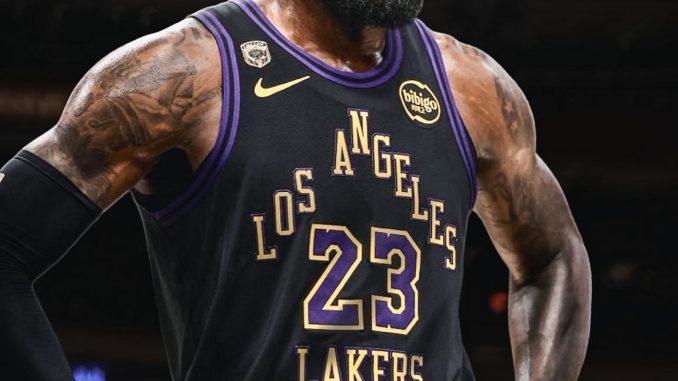
The NBA’s never-ending GOAT debate took another dramatic turn this week after Hall of Fame guard Tim Hardaway Sr. ignited a firestorm across the basketball world with one statement that instantly divided fans, former players, and analysts alike. During a recent appearance discussing all-time greats, Hardaway revealed that LeBron James does not crack his personal top five players in NBA history — a stance that immediately sent social media into chaos and reopened one of sports’ most polarizing conversations.
In an era where LeBron’s longevity, championships, statistical dominance, and historic milestones have pushed many to place him either first or second on the all-time list alongside Michael Jordan, Hardaway’s comments landed like a thunderbolt. The former Golden State Warriors and Miami Heat star didn’t hesitate when discussing his own rankings, choosing to prioritize legends from earlier eras while leaving the NBA’s all-time leading scorer outside the inner circle entirely.
For decades, basketball fans have debated what truly defines greatness. Is it championships? Individual dominance? Longevity? Cultural impact? Statistical production? Or perhaps an unquantifiable aura that transcends numbers altogether? Hardaway’s comments highlighted exactly why the GOAT discussion remains impossible to settle. Every generation values different traits, and every former player carries personal experiences and biases shaped by the eras they competed in.
Still, omitting LeBron from a top five list in 2026 feels almost revolutionary in modern basketball discourse.
LeBron’s résumé is unlike anything the sport has ever seen. Entering the league in 2003 under unprecedented pressure, he somehow exceeded expectations over more than two decades of excellence. Four NBA championships, four MVP awards, countless All-NBA selections, Olympic gold medals, Finals appearances spanning multiple franchises, and the distinction of becoming the league’s all-time leading scorer have turned his career into one of the most decorated in sports history. For many analysts, the conversation surrounding LeBron is no longer whether he belongs in the top five — it’s whether anyone besides Jordan can realistically rank ahead of him.
That’s precisely why Hardaway’s stance exploded online.
The debate intensified because Hardaway isn’t merely another hot-take personality chasing attention. He’s one of the most respected guards of the 1990s, a pioneer whose killer crossover and fearless scoring ability helped define an era of physical basketball. As a member of the legendary “Run TMC” Warriors alongside Mitch Richmond and Chris Mullin, Hardaway became one of the league’s most electrifying offensive stars before later evolving into a cornerstone for the Miami Heat’s rugged playoff teams.
Because of that pedigree, his opinion carries weight.
What makes the situation even more fascinating is the generational divide embedded within the argument. Older NBA legends often prioritize dominance within a player’s era, championship mentality, and cultural impact over cumulative longevity statistics. For many former stars from the 1980s and 1990s, Jordan remains untouchable because of his flawless Finals record, relentless competitiveness, and aura of invincibility during the Chicago Bulls dynasty.
Others from that generation frequently elevate players like Magic Johnson, Larry Bird, Kareem Abdul-Jabbar, and Wilt Chamberlain above modern stars because they believe those icons transformed the sport in ways statistics cannot fully capture.
Hardaway appears to belong firmly within that school of thought.
The backlash from younger fans was immediate. Social media erupted with clips showcasing LeBron’s greatest moments — the chase-down block in the 2016 NBA Finals, his 51-point masterpiece against the Warriors in 2018, his historic scoring record, and his ability to remain elite well into his 40s. Supporters argued that no player in league history has combined elite production, adaptability, durability, and basketball IQ for such an extended period.
Many also pointed out that LeBron has thrived in multiple basketball eras. He dominated during the slower, physical style of the late 2000s, transitioned seamlessly into the pace-and-space revolution, and continued producing at an All-NBA level even as the league evolved around him. That adaptability, supporters argue, separates him from many all-time greats whose dominance was tied more specifically to one era.
But critics of LeBron have long leaned on familiar counterarguments.
Some believe his Finals record damages his GOAT case compared to Jordan’s perfect 6-0 mark. Others criticize the player empowerment era LeBron helped usher in, pointing to superteam formations and high-profile roster maneuvering throughout his career. Certain former players also argue that today’s NBA rules favor offensive stars far more than previous generations, making statistical comparisons difficult across eras.
Hardaway’s comments tapped directly into those underlying tensions.
The timing also matters. As LeBron’s career approaches its inevitable conclusion, conversations surrounding his legacy have become even more intense. Every season now feels historic. Every milestone adds another layer to a career already viewed as nearly untouchable statistically. And yet, despite all of that, resistance to placing him atop the basketball hierarchy remains incredibly strong among some former players and traditionalists.
That resistance often stems from emotional attachment to prior eras.
Jordan’s dominance in the 1990s created an almost mythical standard. For millions of fans and players who experienced that era firsthand, the combination of six championships, global superstardom, and unmatched killer instinct cemented him permanently as basketball’s ultimate figure. Challenging that status can feel almost sacrilegious to those who witnessed it in real time.
LeBron, meanwhile, has lived under constant scrutiny since high school. Every success and every failure unfolded in the social media age, where narratives shift daily and criticism spreads instantly. Unlike Jordan, whose mythology grew over time, LeBron’s career has been dissected minute by minute for more than 20 years.
That visibility has created a uniquely polarizing legacy.
Some fans see him as the most complete player ever — a 6-foot-9 basketball savant capable of controlling every aspect of the game. Others view him as someone who, despite incredible accomplishments, never quite captured the same aura of fearlessness and inevitability associated with Jordan.
Hardaway’s ranking reignited all of those arguments overnight.
Interestingly, this isn’t the first time an NBA legend has left LeBron outside their top five. Several former players across generations have occasionally offered unconventional lists, prioritizing pioneers and cultural icons over modern stars. But the reaction remains explosive every time because of how overwhelming LeBron’s statistical case has become.
At this stage, excluding him entirely almost feels less like a basketball opinion and more like a philosophical statement about how greatness should be measured.
There’s also an emotional element to these debates that fans sometimes overlook. Former players often evaluate greatness through personal experience. Hardaway competed against some of the fiercest stars in NBA history during one of the league’s most physical periods. The players who tormented him, inspired him, or dominated his era naturally carry enormous weight in his mind.
That perspective doesn’t necessarily mean he disrespects LeBron’s greatness. It simply reflects how differently basketball excellence can be interpreted across generations.
Even so, many current analysts were stunned by the omission.
Television panels and podcasts immediately exploded with reactions, with several former players defending LeBron’s place comfortably within the top two all time. Others, however, defended Hardaway’s right to hold his own perspective, arguing that the GOAT debate has become too rigid and intolerant of differing opinions.
That may be the most fascinating aspect of all.
Basketball remains one of the few sports where legacy conversations are almost as important as the games themselves. Fans don’t simply celebrate greatness — they rank it obsessively. Every era searches for validation against the ones that came before it. Every superstar becomes both an athlete and a symbol representing broader generational identity.
Jordan fans defend the ruthless competitiveness and mystique of the 1990s.
LeBron supporters champion versatility, longevity, and modern evolution.
Older fans elevate foundational legends who shaped the game before global media coverage transformed the NBA into a worldwide phenomenon.
As a result, debates like this never truly end.
Hardaway’s comments also arrive during a fascinating period for basketball history. The league is entering a transition phase where younger superstars are beginning to define the future while legends from the LeBron era move closer to retirement. That changing landscape naturally pushes conversations about historical rankings back into the spotlight.
And while fans continue arguing over who belongs where, LeBron’s career somehow continues adding chapters.
Even in the twilight of his journey, he remains one of basketball’s biggest attractions. Younger stars still measure themselves against him. Opposing arenas still erupt when he arrives. Analysts still debate whether anyone has ever possessed his combination of size, vision, intelligence, and sustained dominance.
That’s why Hardaway’s statement resonated so loudly. It challenged what many believed had become settled territory.
Yet perhaps the strongest takeaway from the entire controversy is how impossible the GOAT debate truly is. Basketball spans vastly different eras with wildly different rules, styles, athletic standards, media environments, and cultural pressures. Comparing Chamberlain’s dominance in the 1960s to Jordan’s 1990s dynasty or LeBron’s unprecedented longevity is ultimately an exercise filled with subjectivity.
Every list reveals more about the person creating it than the players themselves.
For Hardaway, greatness may center on competitive aura, era dominance, and the legends who shaped his basketball worldview. For younger fans, LeBron’s all-around brilliance and unmatched longevity may outweigh every other factor. Neither side is likely to convince the other anytime soon.
And maybe that’s exactly why these debates remain so captivating.
In the end, Hardaway accomplished something few basketball voices can still do in today’s nonstop media cycle: he sparked genuine conversation. Whether fans agreed with him or not, his comments forced the basketball world to revisit the standards it uses to define greatness.
For LeBron supporters, the omission felt outrageous. For traditionalists, it represented a defense of older basketball values. For neutral observers, it served as another reminder that sports debates are often driven as much by emotion and identity as by facts and numbers.
One thing, however, remains undeniable. The mere idea of leaving LeBron out of a top five list now generates national headlines because his impact on basketball has become too massive to ignore. Love him or criticize him, rank him first or sixth, his place in the sport’s cultural fabric is permanent.
And as long as basketball fans continue arguing passionately about where exactly he belongs, the GOAT debate will remain alive — louder, fiercer, and more personal than ever.
Be the first to comment